 Seoul City Guide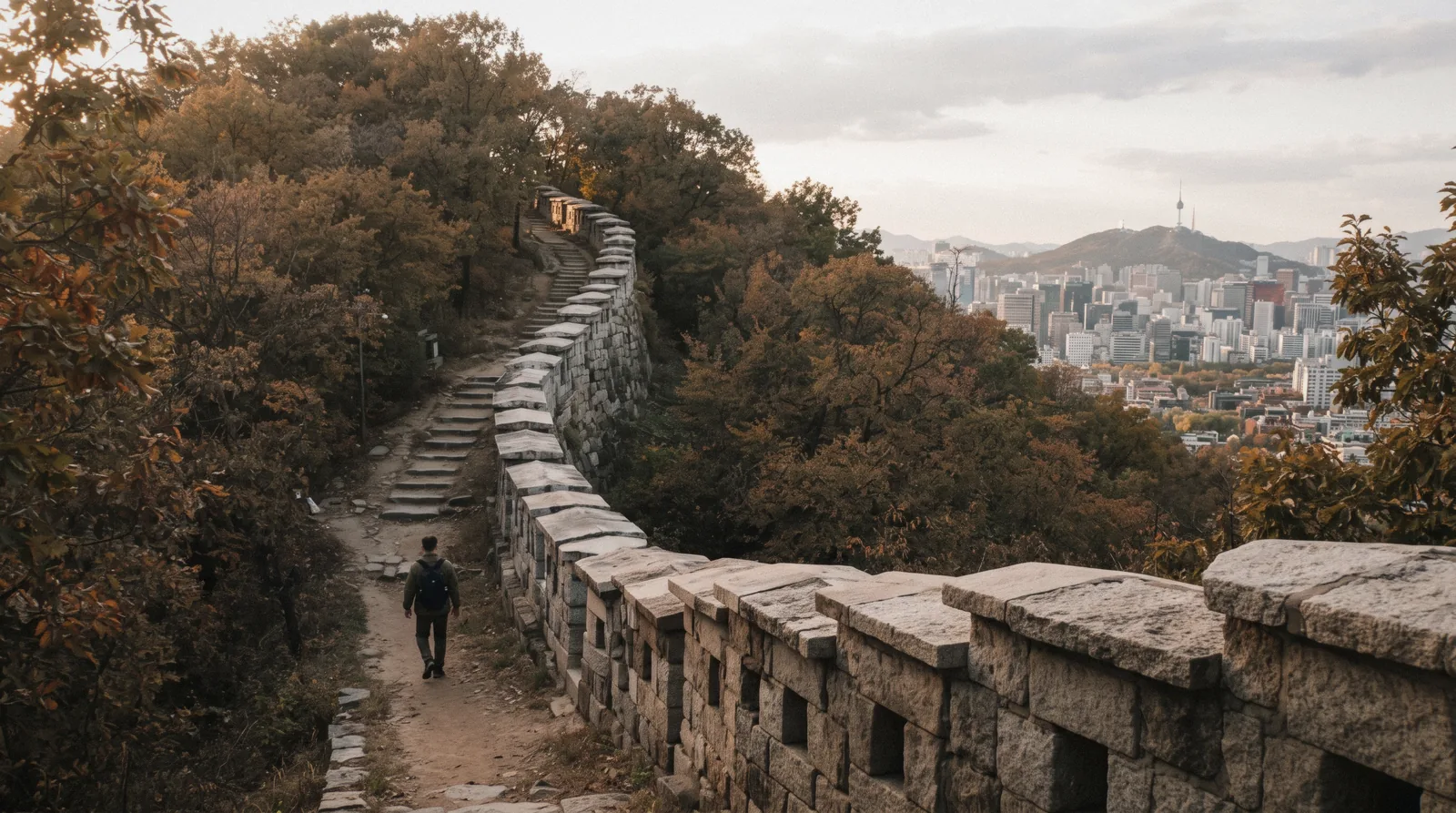
Seoul in Winter: Cold, Clear, Cheap and Empty
Seoul in winter is the version of the city nobody photographs and several people prefer: −2 °C in January, almost no rain, the clearest air of the year, and palaces you can have to yourself. This page covers what works, what closes and what to wear, checked in Q3 2026. The rest of the trip is on the Seoul city guide homepage.
Quick answer The clearest air, the lowest prices, and nothing shut
Winter in Seoul is cold and dry: a January daily mean of −2 °C, a mean daily maximum of 2 °C, and about 17 mm of rain across the whole month. Nothing closes for the season. What you get in exchange for the cold is the clearest air of the year, empty palaces, the lowest hotel rates, and a city that is at its most comfortable indoors — which Seoul is unusually good at.
Key takeaways
- This is when the observatories are worth their price: winter air regularly gives the mountains, which April rarely does.
- Nothing on the sights list shuts. Deoksugung to 21:00, markets, museums, towers — all normal.
- Crampons for Bukhansan and the city wall. The granite ices and people are injured every year.
The Three Winter Months
Daily mean and mean daily maximum temperature with monthly rainfall, from the Korea Meteorological Administration 1991–2020 normals for Seoul, checked in Q3 2026.
| Month | Mean | Daily max | Rain | What it is like |
|---|---|---|---|---|
| December | 0.2 °C | 4.2 °C | 22.6 mm | Cold, bright, still comfortable outdoors in a coat |
| January | −2.0 °C | 2.1 °C | 16.8 mm | The coldest and clearest; the driest month of the year |
| February | 0.7 °C | 5.1 °C | 28.2 mm | Cheapest for hotels; Seollal closes museums for a day |
For comparison, July averages 414 mm of rain. Winter in Seoul is not a wet season in any sense — it is a dry, hard cold with a great deal of sun.
What Winter Is Actually Good For
The views. Cold air is clear air. From December to March the two observatories frequently reach the mountains, and the free terraces below N Seoul Tower give you the same thing for nothing. In April fine dust often flattens the view entirely.
The palaces, empty. Gyeongbokgung at 09:00 in January is a courtyard with almost nobody in it, and snow on the throne-hall roof is worth the numb fingers. Opening hours shorten to 17:00 in winter, so start early.
The markets. Gwangjang and Namdaemun are at their best when it is cold: hot soup at a counter, the hotteok griddles running continuously, and steam everywhere.
The bathhouse. A jjimjilbang at ₩10,000–₩20,000 is the correct winter afternoon, and Koreans treat it exactly that way.
Museum evenings. The national museums run to 21:00 on Wednesdays and Saturdays and cost nothing, which in a season with early darkness is the most useful fact on this page.
What the Cold Actually Does
Seoul's cold is dry and windy rather than damp, which makes it more tolerable than the number suggests and more punishing when the wind gets up. Days below −10 °C occur most winters.
Ice. The granite on Bukhansan and the stone staircases of the city wall freeze, and both become genuinely hazardous without crampons — which are sold cheaply in any outdoor shop and are worn as a matter of routine by Korean hikers.
Shorter hours. The palaces close at 17:00 from November to February rather than 18:00, so a winter day is shorter at the far end. Deoksugung and Changgyeonggung still run to 21:00.
Indoor heating is fierce. Layers you can remove, because the contrast between a −5 °C street and a 25 °C café is the actual discomfort of a Seoul winter.
Snow falls, but not deeply or often in the city; when it does, the palaces are extraordinary for about a day.
What does not happen: closures. Korea does not shut down for winter, transport runs normally, and no attraction in this guide takes a seasonal break.
What to Wear
A proper coat rather than a fashionable one — down or a heavy wool overcoat, gloves, and something over your ears, which is where the wind gets you. Thermal layers underneath, removable indoors.
Shoes with grip. The pavements are cleared quickly and the mountain paths are not.
Hand warmers are sold in every convenience store for a few hundred won and are worth carrying.
And the one uniquely Korean piece of winter advice: the metro, the buses, the malls, the museums and every café are heated to a level that assumes you are wearing outdoor clothing you can take off. Dressing for the street and then sitting fully clothed in a café for an hour is the mistake visitors make.
Winter Days That Work
Three plans that suit the season.
Museums and a bathhouse
Free museums by day, a jjimjilbang at dusk.
- Museums free
- To 21:00 Wed and Sat
- Bathhouse ₩10,000–₩20,000
Palaces at opening
Empty courtyards and short hours: the five palaces.
- Closing at 17:00 in winter
- ₩1,000–₩3,000
- Deoksugung to 21:00
The clear-air view
When the observatories earn their price: tower tickets compared.
- ₩29,000 and ₩31,000
- Terraces free at Namsan
- Best air of the year
Winter Questions
How cold is Seoul in winter?
January averages −2 °C as a daily mean with a mean daily maximum of 2 °C, and days below −10 °C occur most winters. It is a dry, windy cold with very little precipitation — about 17 mm in January.
Does anything close in Seoul in winter?
No. The palaces, museums, markets and towers all keep their ordinary hours; the palaces close at 17:00 rather than 18:00 from November to February.
Is Seoul worth visiting in winter?
For clear air, empty palaces and the lowest hotel rates of the year, yes. It is the season when the observatories actually deliver the view they charge for.
Does it snow in Seoul?
Yes, but not deeply or often in the city centre. When it does, the palace courtyards under snow are the best photographs of the Korean year and last about a day.
Can I hike in Seoul in winter?
What should I wear in Seoul in winter?
A proper coat, gloves and ear covering, with removable layers — indoor heating is fierce, and the street-to-café contrast is the real discomfort.
Reviewed Q3 2026 (July–September 2026); next review Q4 2026. Prices, hours and terms are set by the venue or operator and confirmed at checkout.
We may earn a commission if you book through one of our links, at no extra cost to you. Full affiliate disclosure