 Seoul City Guide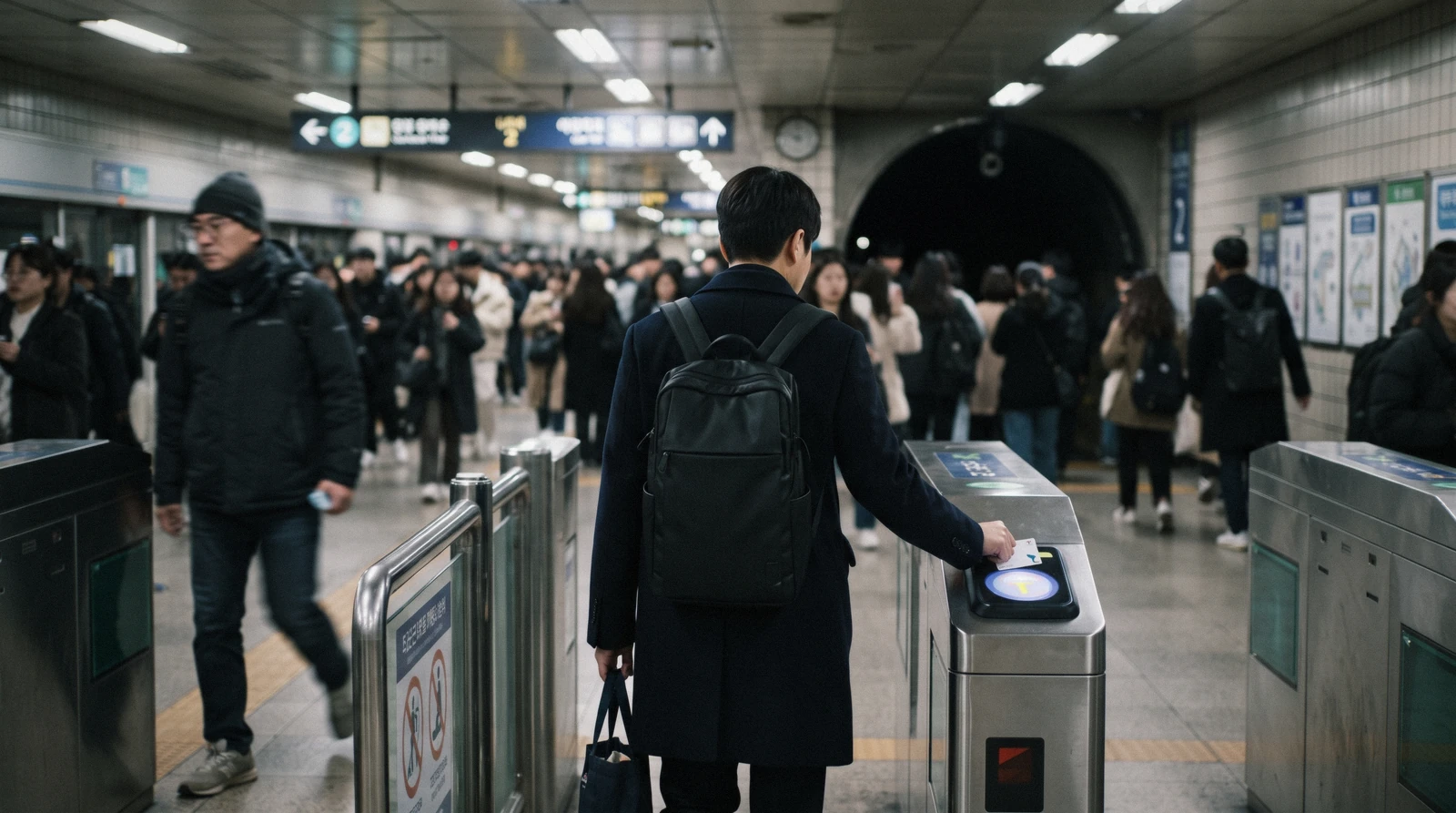
Getting Around Seoul: Cards, Fares and the Transfer Window
Getting around Seoul comes down to one card and three rules: what a ride costs, how long a free transfer lasts, and whether a day pass beats paying as you go. This page carries the fares, the card options and the September 2026 change that ended the 30-day Climate Card for visitors, checked in Q3 2026. The trip around it starts on the Seoul city guide homepage.
Quick answer One card, ₩1,550 a ride, and the transfer rule that makes it cheap
Getting around Seoul means buying a transport card in a convenience store, loading it with cash, and tapping. A metro ride is ₩1,550, a city bus ₩1,500, a neighbourhood bus ₩1,200, and transfers between them are free inside a thirty-minute window. Most visitors never need a pass at all — but if you ride more than about two and a half times a day, a short-term Climate Card pass changes the maths.
Key takeaways
- Tap in before 06:30 and the base fare drops by 20% — the cheapest way to reach Incheon airport for an early flight.
- The 1-to-7-day Climate Card passes still exist and can be bought with a foreign credit card; the 30-day version was withdrawn on 31 August 2026.
- Naver Map and KakaoMap give correct walking and transit directions in Seoul; Google Maps does not, because Korean law restricts map-data exports.
What a Ride Costs
Base fares on a transport card, from the Seoul city government's own fare page and the Seoul Metro pass tables, checked in Q3 2026. Cash fares are higher on the metro; nobody pays them twice.
| Mode | Base fare | Beyond the base | Note |
|---|---|---|---|
| Metro | ₩1,550 (about $1.10) | ₩100 per 5 km after the first 10 km | Youth ₩900, child ₩550 |
| City bus | ₩1,500 (about $1.10) | Flat within Seoul | Blue and green routes |
| Village (maeul) bus | ₩1,200 (about $0.85) | Flat | Short hill routes; the ones to Bukchon and Namsan |
| Taxi | ₩4,800 for the first 1.6 km | ₩100 per 131 m or 30 seconds | Late-night surcharge applies; hail with Kakao T |
| Early-bird fare | 20% off the base | First tap before 06:30 | Applies to the first ride of the day |
A day of four metro rides, one bus and one short taxi comes to roughly ₩14,000 — about $10 — which is the transport line in the daily cost breakdown.
The Transfer Window Is the Real Discount
Seoul charges by journey, not by vehicle. Tap out of the metro, tap onto a bus within thirty minutes, and the second ride is free — the system charges the highest base fare among the modes you used, plus distance beyond ten kilometres. Up to five consecutive rides count, and between 21:00 and 07:00 the window stretches to sixty minutes.
The practical consequence is that a bus is never a mistake. Visitors default to the metro because the signage is easier, then walk twenty minutes from an exit when a village bus outside the station would have been free. It also means the cheap way across the river at night is metro-then-bus rather than a taxi.
Two conditions catch people. You must tap out as well as in — a missed tap-out charges the maximum fare and breaks the chain. And the transfer only works on a card: a single-journey paper ticket buys one ride and nothing else.
Which Card to Buy
The three cards a visitor can actually buy, with what each costs and where it stops working, read off the Seoul city government's transport pages in Q3 2026.
| Card | Card cost | Fares | Worth it when |
|---|---|---|---|
| T-money | ₩2,500–₩4,000 at any convenience store | Pay as you go at the fares above | Almost always — it also pays in taxis and convenience stores |
| Climate Card short-term pass | ₩3,000 for the card, then ₩5,000 (1 day) to ₩20,000 (7 days) | Unlimited Seoul metro and buses | More than about 2.5 rides a day |
| Climate Card 30-day | Withdrawn — no recharge after 31 August 2026 | — | No longer available to visitors |
| Climate Pass | From 1 September 2026 | Registered through K-Pass | Seoul residents only |
Short-term Climate Card passes have been purchasable with international credit cards since 20 March 2025, which the 30-day version never handled well.
The Climate Card Change Nobody Has Updated
Until this year the standard advice for a week in Seoul was the 30-day Climate Card at ₩62,000, or ₩65,000 with the Ttareungi bike share. That advice is now wrong. Seoul stopped allowing recharges of the 30-day pass after 31 August 2026, and its replacement — the Climate Pass, launched in Q3 2026 — is registered through the national K-Pass system and available on the basis of residence in Seoul. A visitor cannot buy it.
What survives is the short-term ladder, and for a normal trip it was always the better product anyway: ₩5,000 for one day, ₩8,000 for two, ₩10,000 for three, ₩15,000 for five and ₩20,000 for seven, covering Seoul metro and Seoul-licensed buses without limit. Ttareungi bikes and the Hangang Bus river service are not included in the short passes.
The break-even is easy arithmetic. At ₩1,550 a ride, a three-day pass at ₩10,000 pays for itself at roughly six and a half rides across the three days — a little over two a day. A visitor doing palaces in the morning and a neighbourhood in the evening usually crosses that; someone staying in Myeongdong and walking to Gyeongbokgung often does not.
One detail on validity: a one-day pass runs to the last train or bus of that calendar day, not for twenty-four hours from the tap. Charging it at 18:00 wastes most of it.
The short-term ladder against pay-as-you-go, at the ₩1,550 metro fare. Break-even is the number of rides at which the pass stops costing you money.
| Pass | Price | Rides to break even | Works out at |
|---|---|---|---|
| 1 day | ₩5,000 | 4 journeys | More than 3 journeys in a day |
| 2 days | ₩8,000 | 6 journeys | 3 a day |
| 3 days | ₩10,000 | 7 journeys | Just over 2 a day |
| 5 days | ₩15,000 | 10 journeys | 2 a day |
| 7 days | ₩20,000 | 13 journeys | Under 2 a day |
Reading the Metro Without Korean
Every line has a number and a colour, every station has a number too, and both appear in English on the signs, the platform screens and the announcements. That station number is the thing to write down: telling a taxi driver "three-two-seven" is more reliable than pronouncing a name.
Exits are numbered and they matter more than in most cities, because Seoul's stations are enormous and the wrong exit can leave you a signalled crossing and four hundred metres from where you meant to be. Gyeongbokgung's Exit 5 comes up inside the palace forecourt; Exit 3 at Anguk puts you at the foot of Bukchon. Every attraction page on this site names the exit rather than only the station.
Trains run from about 05:30 to shortly after midnight, with last-train times posted at each platform — they vary by line and direction, and the last train from Gangnam is earlier than people assume. Priority seats at the ends of each carriage are genuinely respected and stay empty even in a crush; sitting in one as a visitor reads badly. Eating is not done on the trains, and phone calls are taken quietly or not at all.
Buses, and Why the Colours Matter
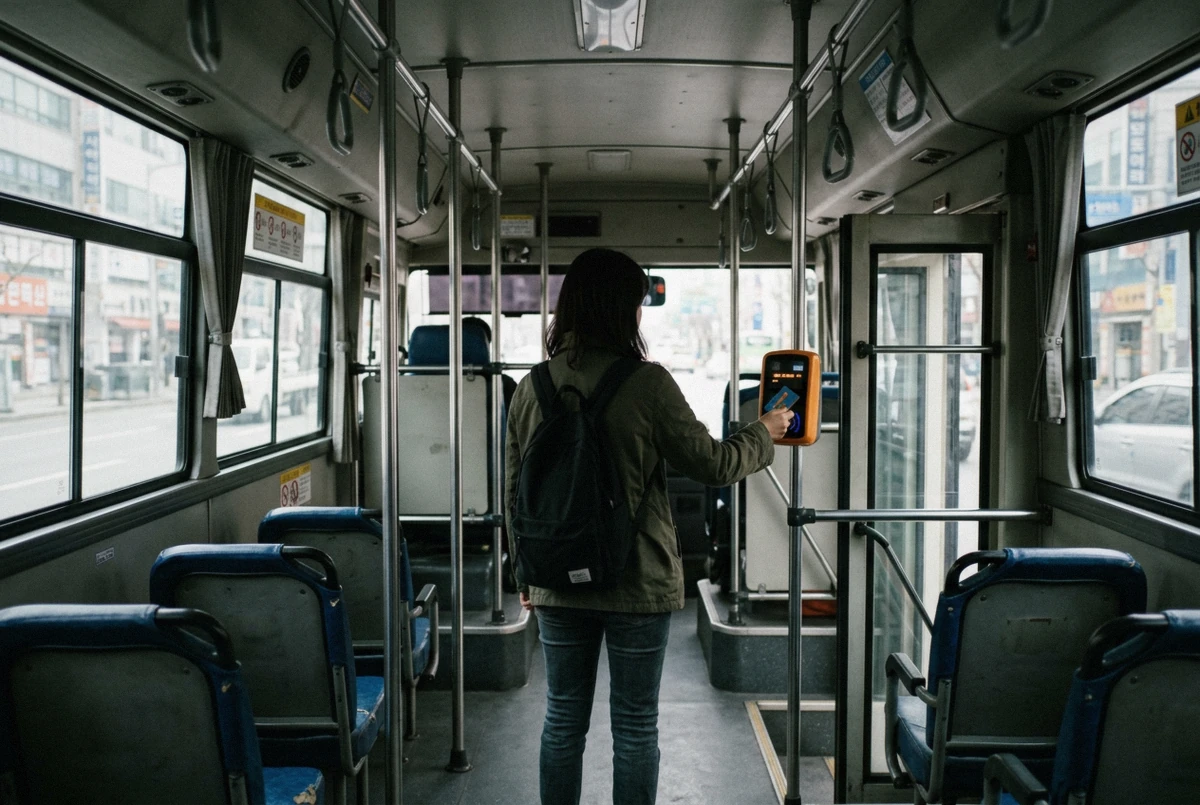
Seoul's buses are colour-coded and the code is the route logic. Blue buses run long trunk routes across the city. Green buses feed those trunks from neighbourhoods and are the ones you take for the last kilometre. Yellow buses circle a single district — the Namsan circular is the one visitors use. Red buses run to satellite cities in Gyeonggi and cost more.
Stops carry an English name and a stop number, and the arrival displays are accurate to the minute. Tap on at the front door and, on green and blue buses, tap off at the back — without the tap-off you lose the transfer and can be charged a distance penalty.
For Namsan and N Seoul Tower the yellow circular is the route that avoids both the cable-car queue and the climb. For Bukchon the green village bus from Anguk saves the hill. Both are the sort of thing a metro-only visitor never discovers.
Taxis, Apps and the Map Problem
Taxis start at ₩4,800 for the first 1.6 kilometres and add ₩100 every 131 metres or thirty seconds, with a surcharge late at night. By the standards of Tokyo or London that is cheap, and after the metro closes it is the only option — but between 18:00 and 20:00 in Gangnam or Hongdae the traffic makes it the slowest choice in the city.
Hail with Kakao T rather than on the street; it works in English, takes a card, and removes the address problem. Most drivers speak little English, and a Korean address read aloud rarely lands. Show the destination on a phone screen instead.
The map problem is worth stating plainly: Google Maps does not give reliable walking or driving directions in South Korea, because export of detailed map data is restricted by law. Transit directions are usable; everything else is not. Install Naver Map or KakaoMap before you arrive — both have English interfaces, both give exit numbers, and both know which subway carriage puts you nearest your exit.
Getting In From the Airport
From Incheon the choice is the AREX train, a limousine bus or a taxi, and the right answer depends on where you sleep and how much luggage you have. The all-stop AREX train is the cheapest and runs on a transport card like any metro ride; the express is faster to Seoul Station and sold separately. Limousine buses drop at hotel clusters and beat the train if you are not near a station. Taxis are the expensive default and the only realistic option after the trains stop.
Gimpo is closer, connected to two metro lines, and is the airport most domestic and short-haul flights use.
The full comparison, with journey times and the early-morning problem, is on the Incheon airport to Seoul page.
Cards and Transfers, Bought Ahead
Two listings that solve the arrival problem — a SIM with a transport card at the airport, and a private transfer for a late landing. Ratings and prices are the operators' own figures, checked in Q3 2026.
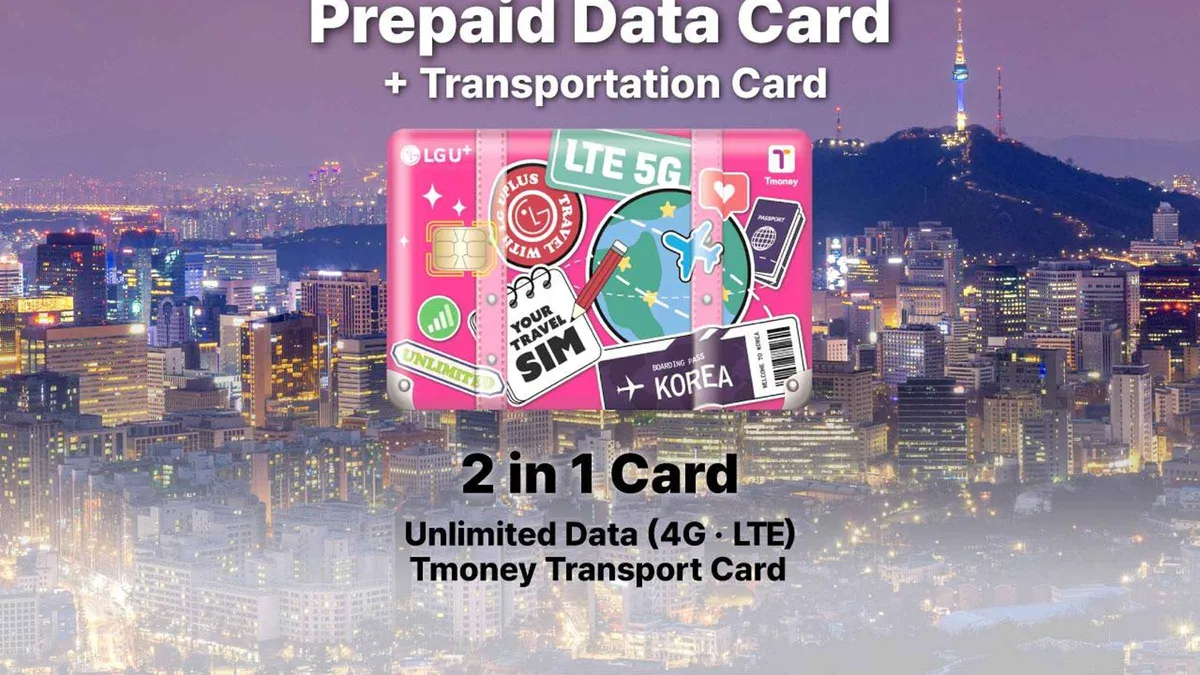 from $11.99
Incheon Airport: Traveler SIM & T-money Transportation Card
Enjoy unlimited 4G data while you are traveling in Korea. Stay online with a stable, high-speed.
Check Availability from $92.89
Seoul: Private Transfer To/From Incheon Airport
Travel with ease between Incheon International Airport and Seoul at an affordable price. Meet your driver at your hotel or arrival gate, then sit back and enjoy a smooth, worry-free.
Check AvailabilityPrices, ratings and details are the platform's own, checked in Q3 2026; dollar figures are the listed prices — the platform bills in your account's currency.
Seoul Transport Questions
How much is the Seoul metro?
₩1,550 on a transport card for the first ten kilometres, then ₩100 more per five kilometres. Youth pay ₩900 and children ₩550. Cash single tickets cost more and lose the free transfer.
Should I buy a T-money card or a Climate Card?
T-money for most trips: it pays for buses, metro, taxis and convenience stores. A short-term Climate Card pass wins once you ride more than about two and a half times a day — ₩10,000 for three days against ₩1,550 a ride.
Is the 30-day Climate Card still available?
No. Recharges ended on 31 August 2026 and the replacement Climate Pass, launched 1 September 2026, is for Seoul residents registered through K-Pass. The 1-, 2-, 3-, 5- and 7-day passes continue and take foreign credit cards.
Are transfers free in Seoul?
Yes, within thirty minutes of tapping off — sixty minutes between 21:00 and 07:00 — for up to five consecutive rides, provided you tap both in and out on a card.
Does Google Maps work in Seoul?
Only for transit. Korean law restricts export of detailed mapping data, so walking and driving directions are unreliable. Use Naver Map or KakaoMap, both of which have English versions and name the station exits.
What time does the Seoul metro stop?
Around midnight, varying by line and direction, with last-train times posted on each platform. After that it is taxis, hailed through Kakao T, or night buses on the blue N routes.
Where do I buy a transport card?
Any convenience store — CU, GS25, 7-Eleven — and the machines in metro stations. The card costs ₩2,500 to ₩4,000 and is loaded with cash at the same counter.
Do US citizens need a K-ETA for Korea?
Not during the current waiver, which runs to 31 December 2026 for the listed countries including the United States. You may still apply for about US$7–8 to skip the paper arrival card. Full details.
Do and don'ts in Seoul, Korea?
Two hands when giving or receiving anything, shoes off at a raised step, priority seats on the metro left empty, no chopsticks standing upright in rice, and no phones in bathhouse changing areas. And no tipping — not in restaurants, taxis, bars or hotels. The full etiquette page.
Reviewed Q3 2026 (July–September 2026); next review Q4 2026. Prices, hours and terms are set by the venue or operator and confirmed at checkout.
We may earn a commission if you book through one of our links, at no extra cost to you. Full affiliate disclosure