 Seoul City Guide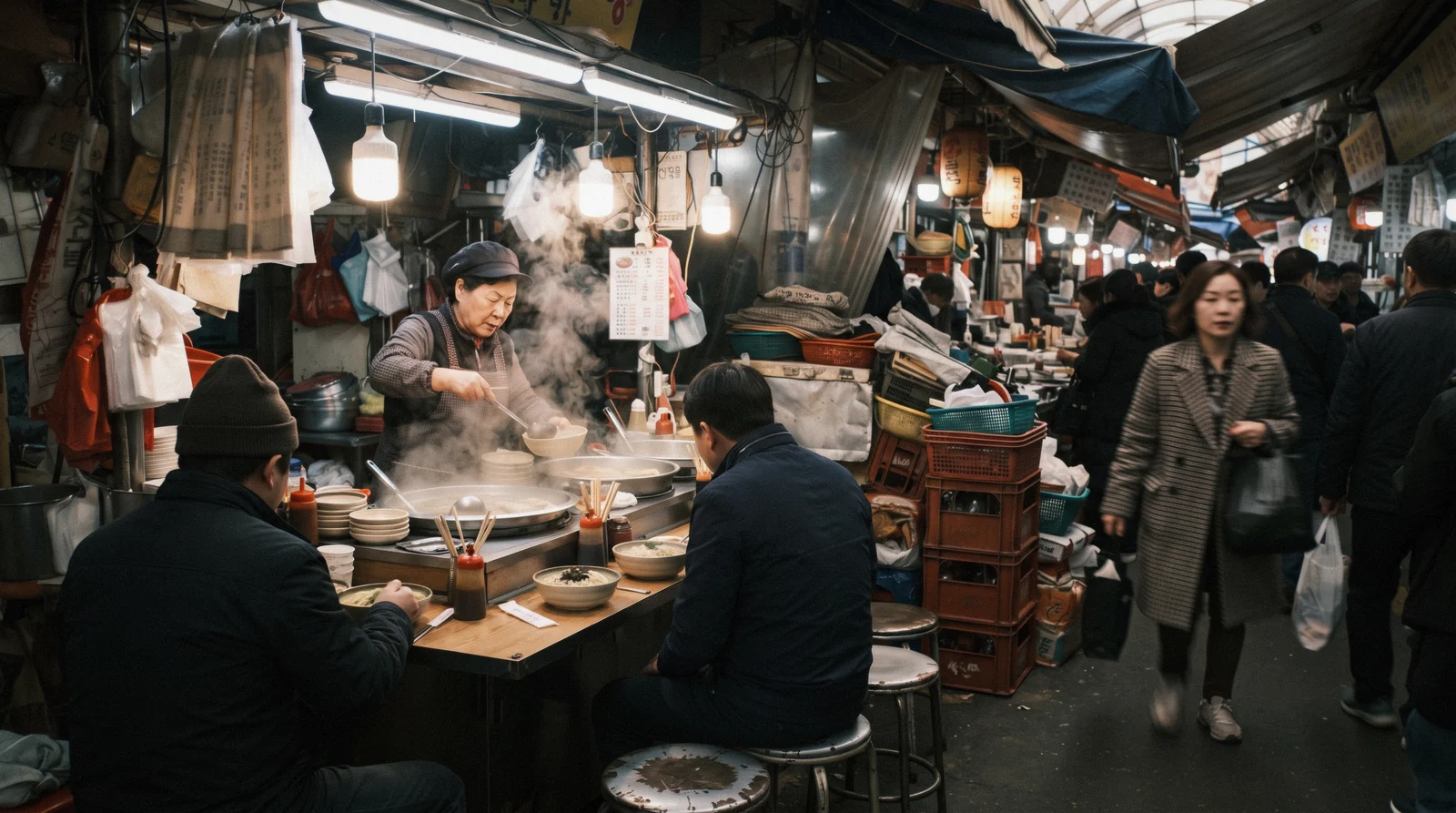
Gwangjang Market: What to Eat and When to Go
Gwangjang Market is the oldest daily market in Seoul and the best lunch in the centre — a covered grid of fabric stalls with a food street running through the middle of it. This page carries the opening hours, the Sunday closure, what a plate actually costs and the overcharging problem the district has been dealing with, checked in Q3 2026. The rest of the city is on the Seoul city guide homepage.
Quick answer Go at 11:00, sit at a counter, spend ₩10,000
Gwangjang Market opened in 1905 and still works as a wholesale fabric market with a food street cut through the middle. The food alleys run 09:00 to 23:00 all year; the shops around them close at 18:00 and take Sundays off. A counter lunch of mung-bean pancake, knife-cut noodles and a plate of gimbap comes to ₩8,000–₩15,000 a head, and the stools are the point — this is not a place with tables.
Key takeaways
- Arrive at 11:00 or after 20:00. Between 12:30 and 14:00 the aisles are shoulder to shoulder and the stools all have someone on them.
- Ask the price before you sit. Jongno-gu has been enforcing displayed pricing after repeated complaints about tourist rates; stalls that will not quote are the ones to walk past.
- It is eight minutes from Cheonggyecheon and fifteen from Changdeokgung, which makes it the obvious lunch between two palaces.
Key facts
Opening hours
| Market shops | 09:00–18:00 |
|---|---|
| Food street | 09:00–23:00 |
| Charity and second-hand floor | 10:00–19:00 |
Closed Sundays, except the food street, which stays open all year.
Admission
- Adult
- Free to enter; a full lunch ₩8,000–₩15,000
- Reduced
- Bindaetteok about ₩5,000, mayak gimbap about ₩3,000
- Free
- Walking the fabric and hanbok floors costs nothing
Planning it
- Time needed
- About an hour for lunch; two if you walk the fabric floors as well
- Address
- 88 Changgyeonggung-ro, Jongno-gu, Seoul — Jongno 5-ga (Line 1), Exits 7 and 8 open straight into the market
A Fabric Market With a Kitchen Down the Middle
Gwangjang was Korea's first permanent daily market, founded in 1905 by Korean merchants as a deliberate answer to Japanese-run trading houses, and the fabric business is still the bulk of it. Upstairs and along the edges you will find bolts of silk, hanbok tailors, curtain makers and a well-known second-hand clothing floor that has become a weekend destination for young Koreans.
The part visitors come for is the food street, a cross of covered alleys where about two hundred stalls cook in front of you. There are no menus in the restaurant sense: each stall does two or three things, the ingredients are stacked in view, and you sit at a counter with strangers on both sides.
This is the oldest continuously working market in the city, and it is not a museum piece — the fabric traders are doing business around you, the carts are moving stock, and at 08:00 the whole place belongs to people at work rather than to anyone taking photographs.
What to Order, and What It Should Cost
The dishes Gwangjang is actually known for, with the prices stalls displayed when we checked in Q3 2026. Prices vary by a thousand won or two between stalls; anything far above this range is a stall pricing for tourists.
| Dish | Typical price | What it is | Where |
|---|---|---|---|
| Bindaetteok | about ₩5,000 | Mung-bean pancake ground on a stone mill and fried in a shallow pan of oil | The row nearest the north gate, where the mills are visible |
| Mayak gimbap | about ₩3,000 | Thumb-sized seaweed rolls eaten with mustard sauce; the name means 'narcotic' | Central crossing of the food street |
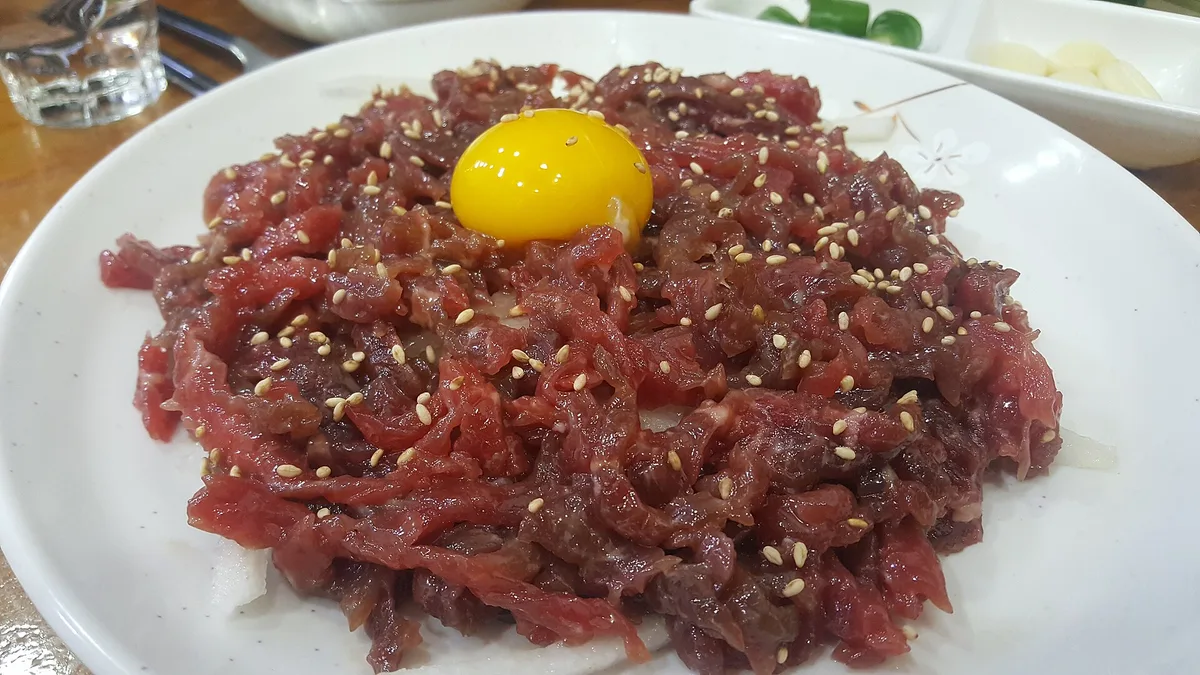
| Yukhoe | ₩15,000–₩25,000 | Raw seasoned beef with pear and egg yolk | The dedicated yukhoe alley on the east side |
| Kalguksu | ₩6,000–₩8,000 | Knife-cut wheat noodles in anchovy broth, often with a mandu side | Counter stalls throughout |
| Sundae and soondae-guk | ₩8,000–₩12,000 | Blood sausage, steamed or in soup | South-eastern alleys |
Cash still moves faster than cards at the smaller stalls, though almost everywhere now takes both. Soju and makgeolli are ₩4,000–₩5,000 a bottle and are drunk at the counter.
The Overcharging Problem, and How to Sidestep It
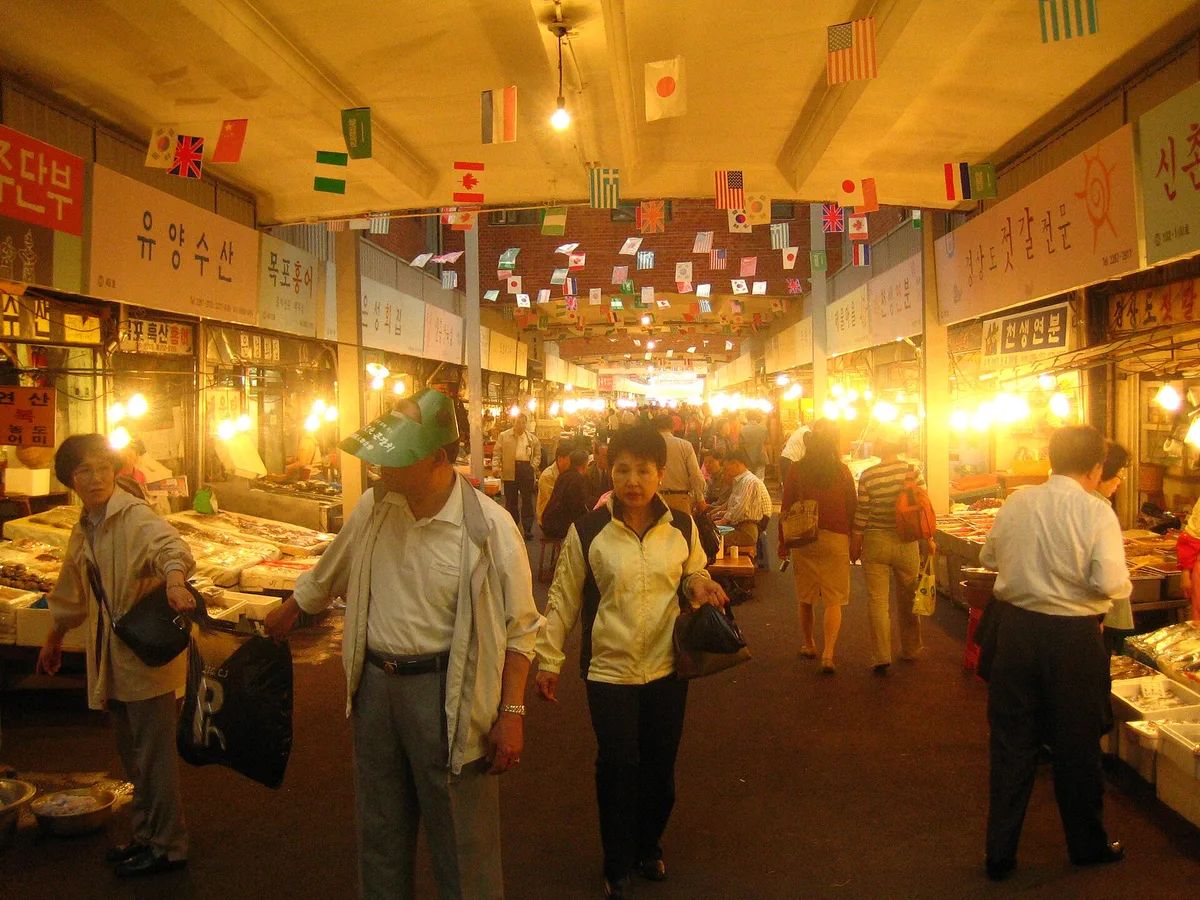
Gwangjang's fame has a cost. Since the market appeared in a Netflix series and then in millions of short videos, complaints about tourist pricing — small portions, prices quoted only after eating, side dishes charged as extras — became frequent enough that Jongno-gu and the merchants' association stepped in with displayed-price rules and inspections.
The practical defence is simple and not confrontational. Look for the printed price board before you sit; nearly every stall now has one. Ask what a portion costs before ordering, in any language — pointing at the board works. And be wary of a stall that is empty at 12:30 while the one beside it has a queue of office workers, because Korean customers make this judgement for you every day.
The better answer is to shift your visit off the peak. At 11:00 or after 20:00 the stalls that live on turnover are attentive, the counters have space, and the prices behave. Weekday mornings are best of all.
When to Go
The food street is open from 09:00 to 23:00 every day of the year, so the decision is about crowds rather than closures. The shops around it keep 09:00 to 18:00 and shut on Sundays, and the charity floor runs 10:00 to 19:00.
Lunch peak is 12:30 to 14:00 and it is genuinely uncomfortable in July and August, when the covered alleys hold the heat. Dinner peak runs 18:30 to 20:30, after which it thins out and the drinking hours begin — the market's evening character is closer to a bar than a canteen, and the stools stay busy until closing.
Sunday is quieter than people expect because the shopping half is shut, which makes it a decent day for the food alleys alone. Public holidays such as Seollal and Chuseok are the exception: many stalls close for the family holiday, and the market thins to a handful of counters.
How It Fits the Day
Gwangjang sits on the north bank of Cheonggyecheon, eight minutes' walk from the stream and fifteen from Changdeokgung, which makes it the natural lunch between the palace quarter and the eastern half of the centre.
A standard morning runs Gyeongbokgung at 09:00, Bukchon at 10:30, then down through Anguk to the market by noon. From the counter, Cheonggyecheon takes you east on foot to Dongdaemun in twenty-five minutes without a single traffic light, or west back to the palaces.
If the market is the destination rather than a stop, pair it with the evening: eat at 20:00, walk the stream when it is lit, and finish at Ikseon-dong fifteen minutes north-west for a drink in a converted hanok.
What a Visit Costs
The market is free to walk; what you spend is on food, and the guided walks do the ordering. Prices from stall boards and GetYourGuide, checked in Q3 2026.
| Option | Price | What it gets you | Notes | Book |
|---|---|---|---|---|
| Eating at a counter yourself | ₩8,000–₩15,000 a head | Food street 09:00–23:00 | Shops closed Sundays | Official site |
| Guided market tour, 8+ tastings | from $98 | 3 hours | Free cancellation 24 h before | Check Availability |
| Vegetarian and vegan market tour | from $89 | 2 hours | Free cancellation 24 h before | Check Availability |
Official ticket-office links are not affiliate links.
Gwangjang Market on the Map
Pinned at the entrance, with the pages for what is nearby.
Next Stop from the Market
Three places within twenty minutes on foot, in the order the day usually runs.
Cheonggyecheon
Eight minutes south to Cheonggyecheon and the walkway below street level — the fastest way across the centre.
8 min walkIkseon-dong
About 15 minutes north-west to Ikseon-dong's hanok alleys, which is where the evening goes after the market.
15 min walkDongdaemun Design Plaza
About 20 minutes east along the stream to Dongdaemun Design Plaza, which does its business after dark.
20 min walkGuided Market Walks
Three walks that use Gwangjang as their spine, from a two-hour tasting run to an evening that adds a palace. Ratings and prices are the operators' own figures, checked in Q3 2026.
 from $97.56
Seoul: Guided Food & Market Tour with 8+ Tastings
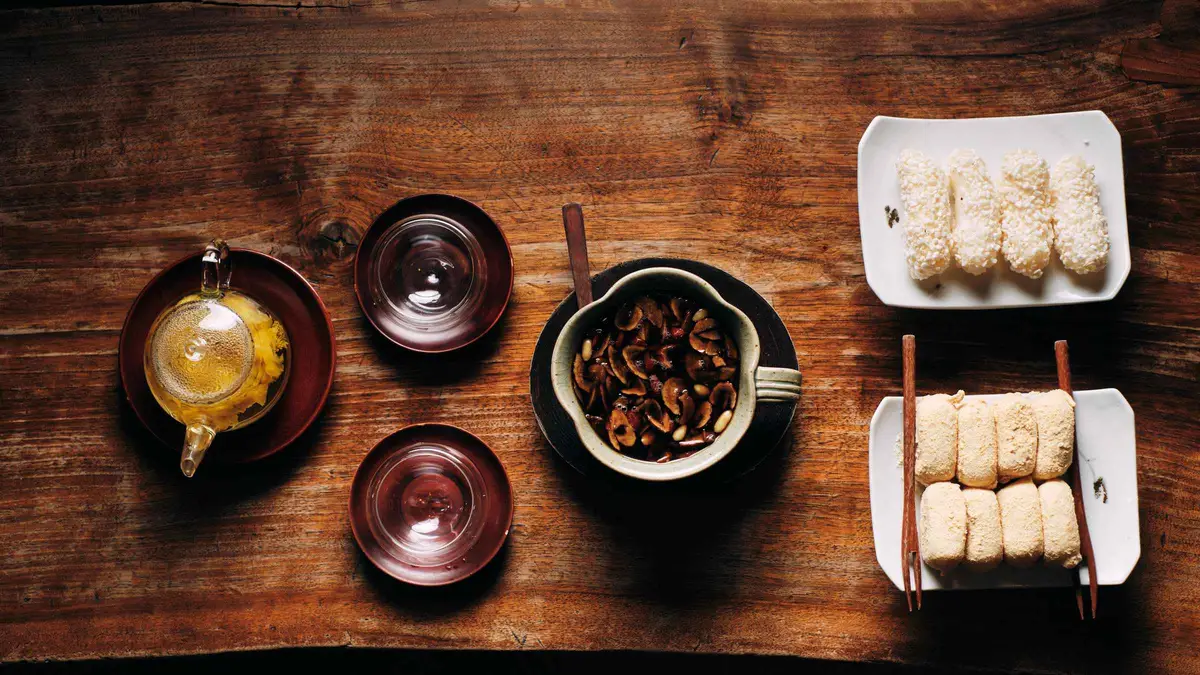
Discover Seoul’s hidden foodie gems on a flavorful journey through markets, backstreets, and teahouses, tasting authentic dishes, local snacks, and our surprise Secret Dish along the.
Check Availability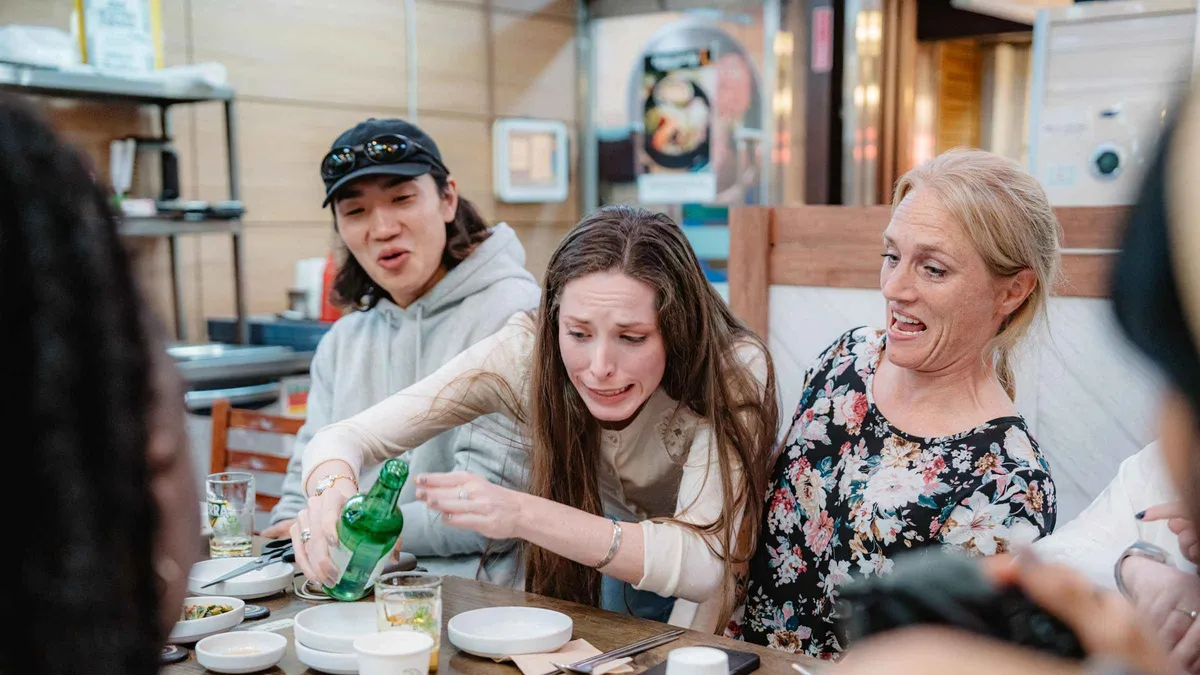 from $73
Seoul Street Food Market Tour
This experience goes beyond delicious food; it's a cultural journey where you'll connect with friendly hosts, engage with local vendors, and bond with fellow.
Check Availability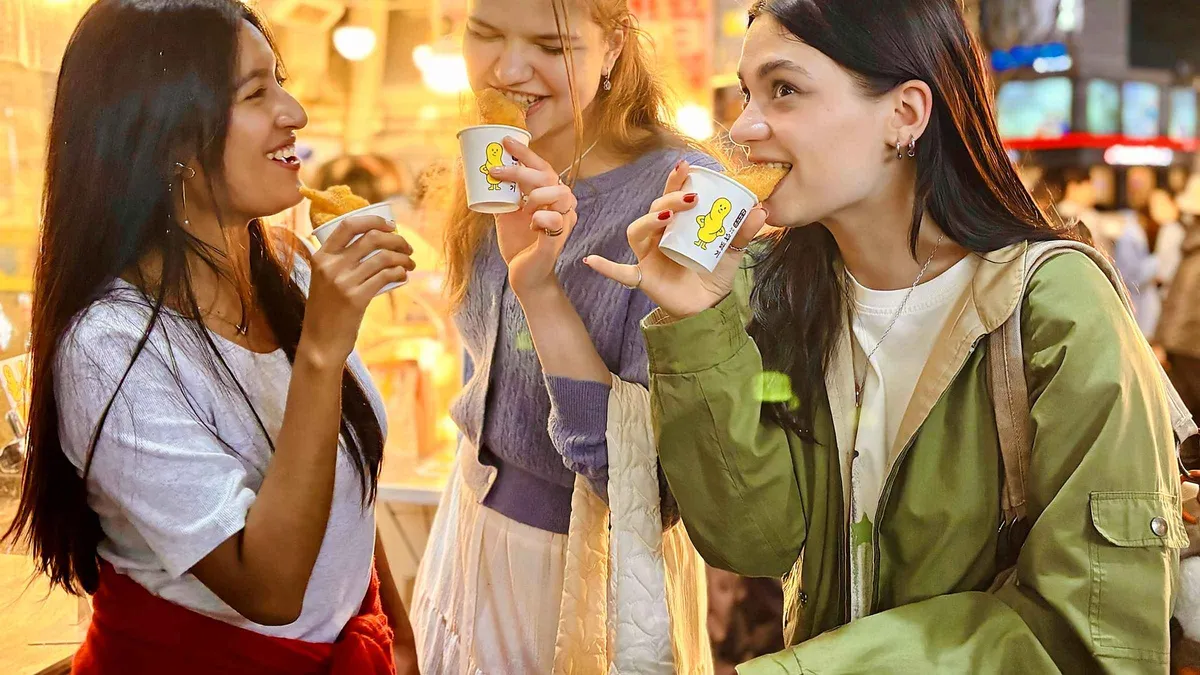 from $67.15
Seoul: Night Palace & Market Food Tour with Vehicle
Unwind in Seoul's night glow where history meets flavor. On this small-group tour (max 15), ride between sights, taste generous market dishes, and feel the city come alive with lights and.
Check AvailabilityPrices, ratings and details are the platform's own, checked in Q3 2026; dollar figures are the listed prices — the platform bills in your account's currency.
Gwangjang Market Questions
What are Gwangjang Market's opening hours?
The food street runs 09:00 to 23:00 all year. The market shops keep 09:00 to 18:00 and close on Sundays; the charity and second-hand floor runs 10:00 to 19:00.
Is Gwangjang Market closed on Sundays?
The shops are; the food street is not. A Sunday visit for lunch works, and the aisles are quieter because the fabric trade is shut.
What should I eat at Gwangjang Market?
Bindaetteok, the mung-bean pancake fried in a pan of oil, at about ₩5,000; mayak gimbap at about ₩3,000; and either kalguksu noodles or yukhoe raw beef depending on the hour. Prices by dish are in the table above.
How much does lunch cost at Gwangjang Market?
₩8,000 to ₩15,000 a head for a proper counter meal with a drink. Anything far above that range is a stall pricing for visitors rather than for the neighbourhood.
How do I avoid being overcharged?
Check the printed price board before sitting, ask the price before ordering, and prefer the stall with local customers at it. Jongno-gu has been enforcing displayed pricing after repeated complaints.
What is the nearest station to Gwangjang Market?
Jongno 5-ga on Line 1, Exits 7 and 8, which open directly onto the market. Euljiro 4-ga on Lines 2 and 5 is a five-minute walk from the southern side.
Is Gwangjang or Namdaemun better?
Gwangjang for eating, Namdaemun for shopping. Gwangjang's food street is the denser and more famous of the two; Namdaemun is larger, sells everything, and much of it trades overnight.
Reviewed Q3 2026 (July–September 2026); next review Q4 2026. Prices, hours and terms are set by the venue or operator and confirmed at checkout.
We may earn a commission if you book through one of our links, at no extra cost to you. Full affiliate disclosure