 Seoul City Guide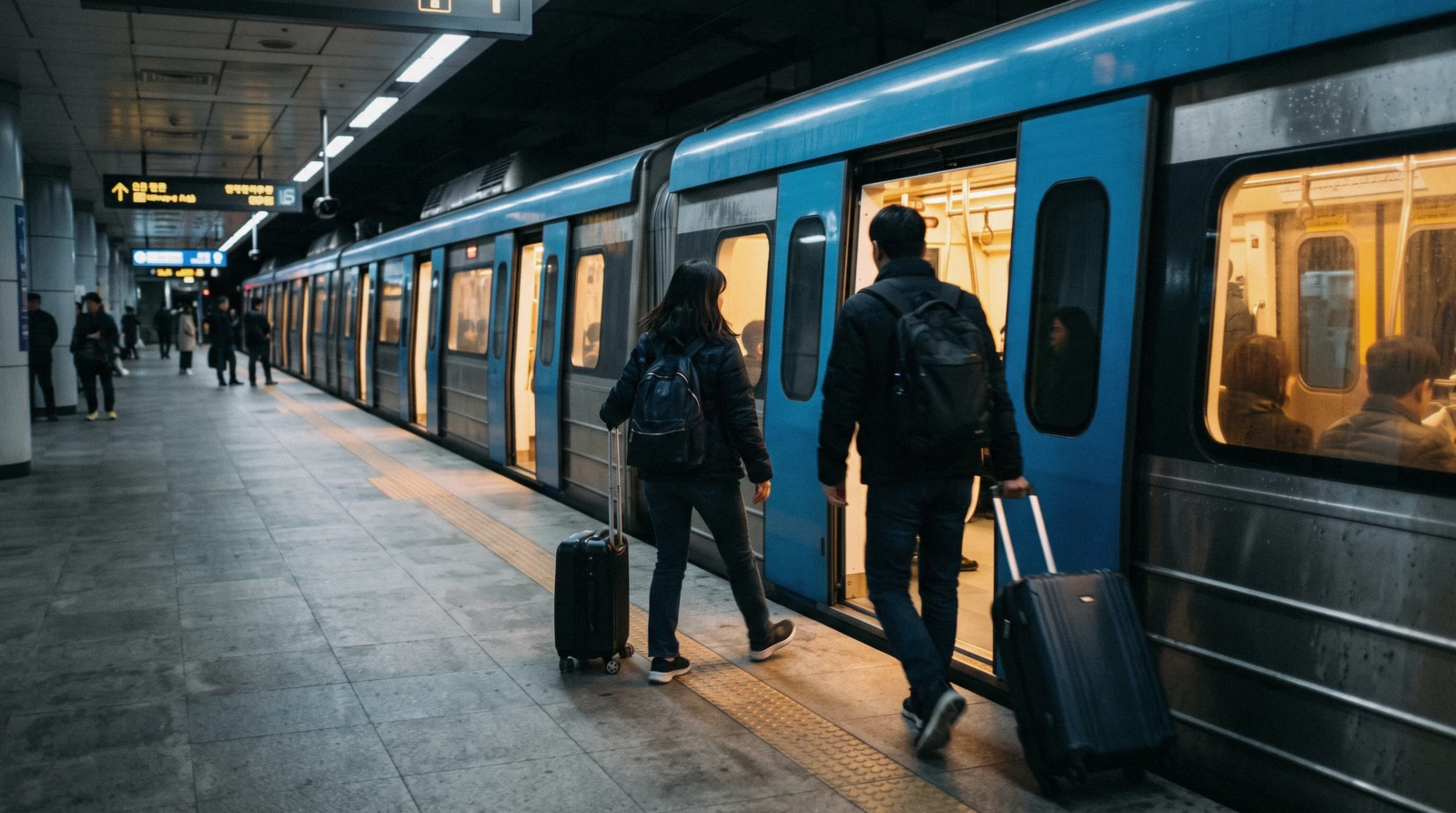
Incheon Airport to Seoul: Train, Bus or Taxi
Incheon airport to Seoul is a choice between three prices and three amounts of walking: the all-stop train on your transport card, the express train with a reserved seat, or a limousine bus that stops at hotel clusters. This page carries the fares, the journey times and the late-arrival problem, checked in Q3 2026. The trip that follows is on the Seoul city guide homepage.
Quick answer Express train ₩13,000, bus ₩10,000, all-stop on your card — which one is yours
Incheon airport to Seoul takes about an hour whichever way you go, and the difference is comfort rather than time. The all-stop AREX train is the cheapest and runs on the same transport card as the metro. The express costs ₩13,000, reserves you a seat and goes straight to Seoul Station. A standard limousine bus is ₩10,000 and wins if your hotel is nowhere near a station. A taxi is the only option after the trains stop.
Key takeaways
- Buy a transport card in the arrivals hall before anything else — it pays for the all-stop train, every metro ride and most convenience stores.
- Tapping in before 06:30 takes 20% off the base fare, which makes the early-flight run cheaper than it looks. Fare rules here.
- Landing after midnight? Book a private transfer or budget for a taxi; the airport railway is closed and the buses thin out.
The Four Ways In
Fares and journey times for each route into central Seoul, from the AREX passenger site and the Seoul city government's airport bus fare table, checked in Q3 2026. Times are to Seoul Station or an equivalent central stop.
| Route | Adult fare | Journey | Best for |
|---|---|---|---|
| AREX all-stop train | Charged as a metro ride on a transport card | About 60 minutes, 11 stops | Light luggage, anywhere on Line 1 or 4 |
| AREX express train | ₩13,000 (about $9.40); child ₩9,500 | 43 minutes, non-stop | Reserved seat, arriving at Seoul Station |
| Limousine bus, standard | ₩10,000 (about $7.20) | 60–90 minutes with traffic | Hotels far from a station, heavy bags |
| Limousine bus, deluxe | ₩16,000 (about $11.50) | Same, more legroom | Overnight arrivals wanting a seat |
| Taxi | Metered from ₩4,800, expect a large fare plus tolls | 60–90 minutes | After the trains stop, or four people sharing |
The express train's list fare is ₩18,500 to Terminal 1 and ₩19,100 to Terminal 2; the ₩13,000 adult price is the standing discounted fare shown on the operator's own booking page.
The Two Trains, and Why the Cheap One Usually Wins
Both trains leave from the same basement level at both terminals, and both take you to Seoul Station. The express runs non-stop in about forty-three minutes with an assigned seat, cabin staff, luggage space and free wi-fi. The all-stop train takes around an hour, calls at eleven stations on the way, and costs a fraction of the price because it is charged like any other metro journey on your card.
The honest recommendation for most visitors is the all-stop train, for a reason that has nothing to do with money: it stops at Hongik University, Gongdeok and Digital Media City, which puts a large share of Seoul's hotels closer than Seoul Station does. Riding the express and then doubling back on the metro is slower than taking the slow train in the first place.
The express earns its price in two cases: you are staying near Seoul Station or Myeongdong, or you are travelling with luggage that makes standing for an hour unpleasant. Trains from the airport run from about 05:20 to shortly before midnight, with the last express earlier than the last all-stop service.
Limousine Buses: the Right Answer More Often Than People Think
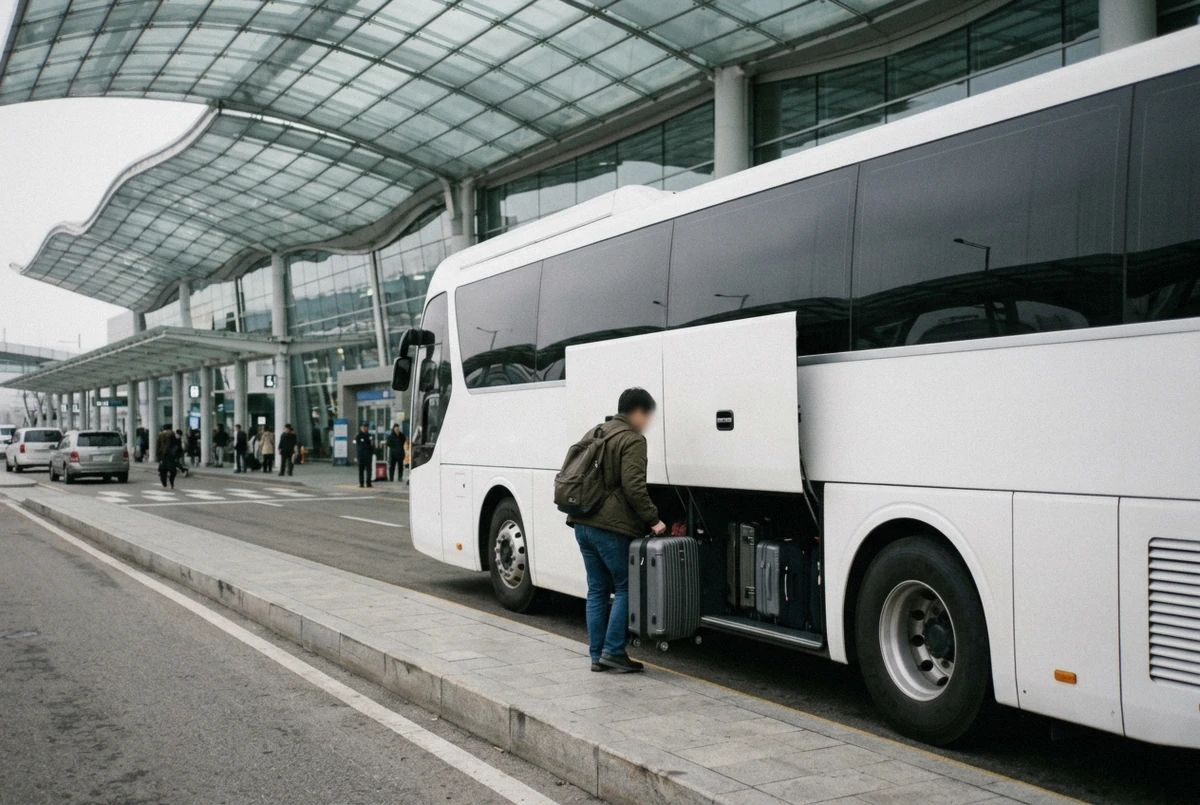
Seoul's airport buses are comfortable coaches with luggage holds, and they cost ₩10,000 on the standard routes or ₩16,000 for the deluxe ones with wider seats. The city's published fare table also prices the Seoul–Gimpo and Gimpo–Incheon legs at ₩5,000 each.
What makes them worth considering is where they stop. Routes are built around hotel clusters — Myeongdong, Jongno, Gangnam, Itaewon — so the bus often ends two hundred metres from your door rather than at a station with three flights of stairs and a transfer. With two suitcases and a jetlagged child, that is the whole decision.
The cost is traffic. Between 07:00 and 09:00 and again from 17:00 to 20:00, a bus that should take an hour takes ninety minutes, and there is no way around it. Buy the ticket at the counter or the machine in the arrivals hall, confirm the stop name with the attendant, and check the last departure — most routes finish around 22:00, well before the trains do.
Landing After Midnight
This is the case that catches people, because the airport railway is closed between roughly 01:00 and 05:20 and the limousine buses have finished for the day.
There are three ways through it. A small number of night buses run from the airport into the city on a limited schedule. A taxi runs at any hour, on the meter with a late-night surcharge and motorway tolls added — the standard fare structure starts at ₩4,800 for the first 1.6 kilometres and climbs steadily over a fifty-kilometre run. Or you book a private transfer in advance, which fixes the price and puts a driver with a name board in the arrivals hall.
The fourth option is to stay put. Incheon has hotels inside and beside the terminals, and the transit hotel airside is a genuine solution for a 02:00 arrival with an 08:00 plan. Whatever you choose, decide before you land: the taxi rank at 01:30 is not the place to be doing arithmetic.
Gimpo Is the Other Airport
Gimpo handles domestic flights and short-haul international routes to Japan, China and Taiwan, and it sits inside the city rather than an hour outside it. Two metro lines and the AREX serve it directly, so the journey into central Seoul is an ordinary metro ride on your transport card, typically thirty to forty minutes.
If you are combining Seoul with Busan or Jeju, the flight will usually leave from Gimpo, and the practical difference is an hour of your day in each direction. The city government's fare table prices the Seoul–Gimpo limousine bus at ₩5,000 and the Gimpo–Incheon connection at the same, which matters if you arrive at one airport and leave from the other.
What to Do in the First Hour
Three things, in this order, and none of them takes long.
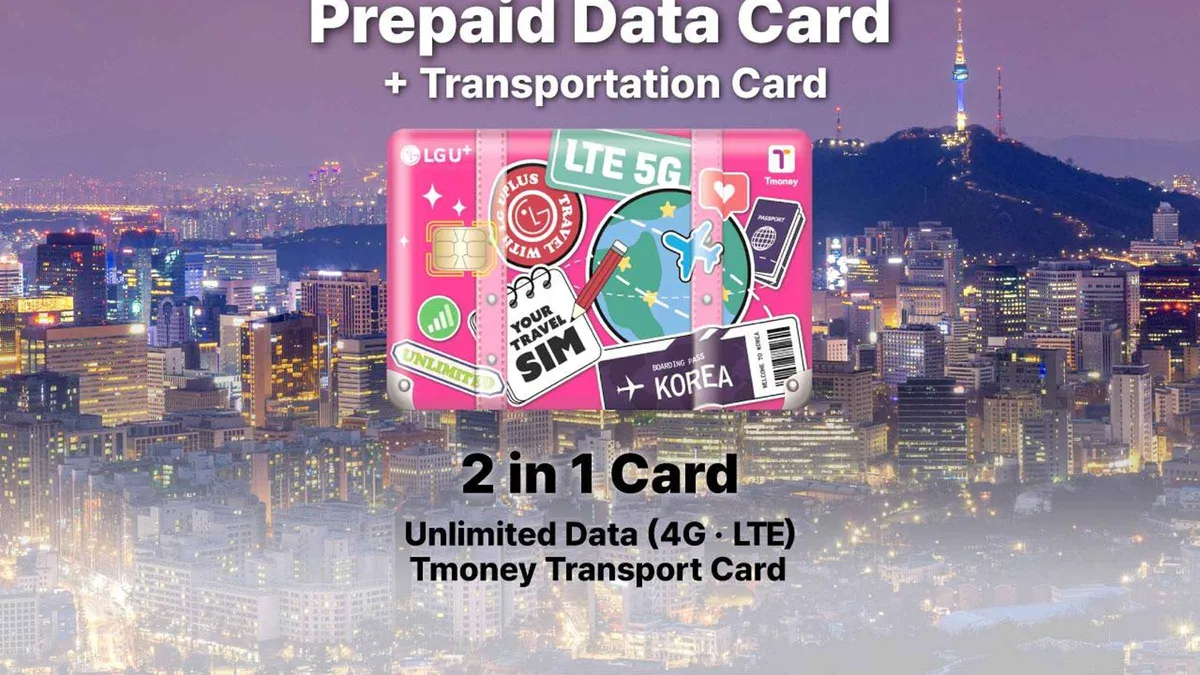
Buy a transport card. Convenience stores in both terminals sell T-money for ₩2,500 to ₩4,000, and the machines beside them load it with cash. This single purchase covers the all-stop train, every metro and bus ride afterwards, and most convenience-store purchases. Listings that bundle a card with a SIM collected at arrivals start around $12 and remove two queues at once.
Sort out data. Korean addresses, Naver Map and Kakao T all need a connection, and the airport is the cheapest and easiest place to get one — see the eSIM and wi-fi page for the options.
Then decide your route with the timetable in front of you rather than from memory. Both terminals have staffed information desks with English speakers, and the tourist information counter will print the bus stop number for your hotel, which is a better answer than any app gives you.
Arrivals, Sorted in Advance
Two listings that cover the first hour: a SIM with a transport card collected at Incheon, and a private car for a late or heavy-luggage arrival. Ratings and prices are the operators' own figures, checked in Q3 2026.
 from $11.99
Incheon Airport: Traveler SIM & T-money Transportation Card
Enjoy unlimited 4G data while you are traveling in Korea. Stay online with a stable, high-speed.
Check Availability from $92.89
Seoul: Private Transfer To/From Incheon Airport
Travel with ease between Incheon International Airport and Seoul at an affordable price. Meet your driver at your hotel or arrival gate, then sit back and enjoy a smooth, worry-free.
Check AvailabilityPrices, ratings and details are the platform's own, checked in Q3 2026; dollar figures are the listed prices — the platform bills in your account's currency.
Airport Transfer Questions
How much is the train from Incheon airport to Seoul?
The express is ₩13,000 for adults and ₩9,500 for children, non-stop to Seoul Station in about forty-three minutes. The all-stop train is charged as a normal metro journey on a transport card and takes about an hour with eleven stops.
Is the express train worth it?
Only if you are staying near Seoul Station or carrying a lot of luggage. The all-stop train calls at Hongik University, Gongdeok and Digital Media City, which are closer to most hotels than Seoul Station is.
How do I get from Incheon to Seoul after midnight?
Taxi, a limited night bus, or a pre-booked private transfer. The airport railway closes around 01:00 and restarts about 05:20, and the limousine buses finish earlier than that.
How much is the airport bus to Seoul?
₩10,000 on standard routes and ₩16,000 on deluxe ones, per the Seoul city government's published fare table. The Seoul–Gimpo and Gimpo–Incheon legs are ₩5,000 each.
Where do I buy a T-money card at the airport?
Any convenience store in either terminal, for ₩2,500–₩4,000, loaded with cash at the counter. It then pays for the all-stop train and everything else in the city — see getting around Seoul.
Is a taxi from Incheon expensive?
By Seoul standards, yes: it is a fifty-kilometre run on the meter with motorway tolls and a late-night surcharge after 22:00. For two people the express train is cheaper; for four with luggage arriving at 01:00 a taxi or a fixed-price transfer is reasonable.
Reviewed Q3 2026 (July–September 2026); next review Q4 2026. Prices, hours and terms are set by the venue or operator and confirmed at checkout.
We may earn a commission if you book through one of our links, at no extra cost to you. Full affiliate disclosure