 Seoul City Guide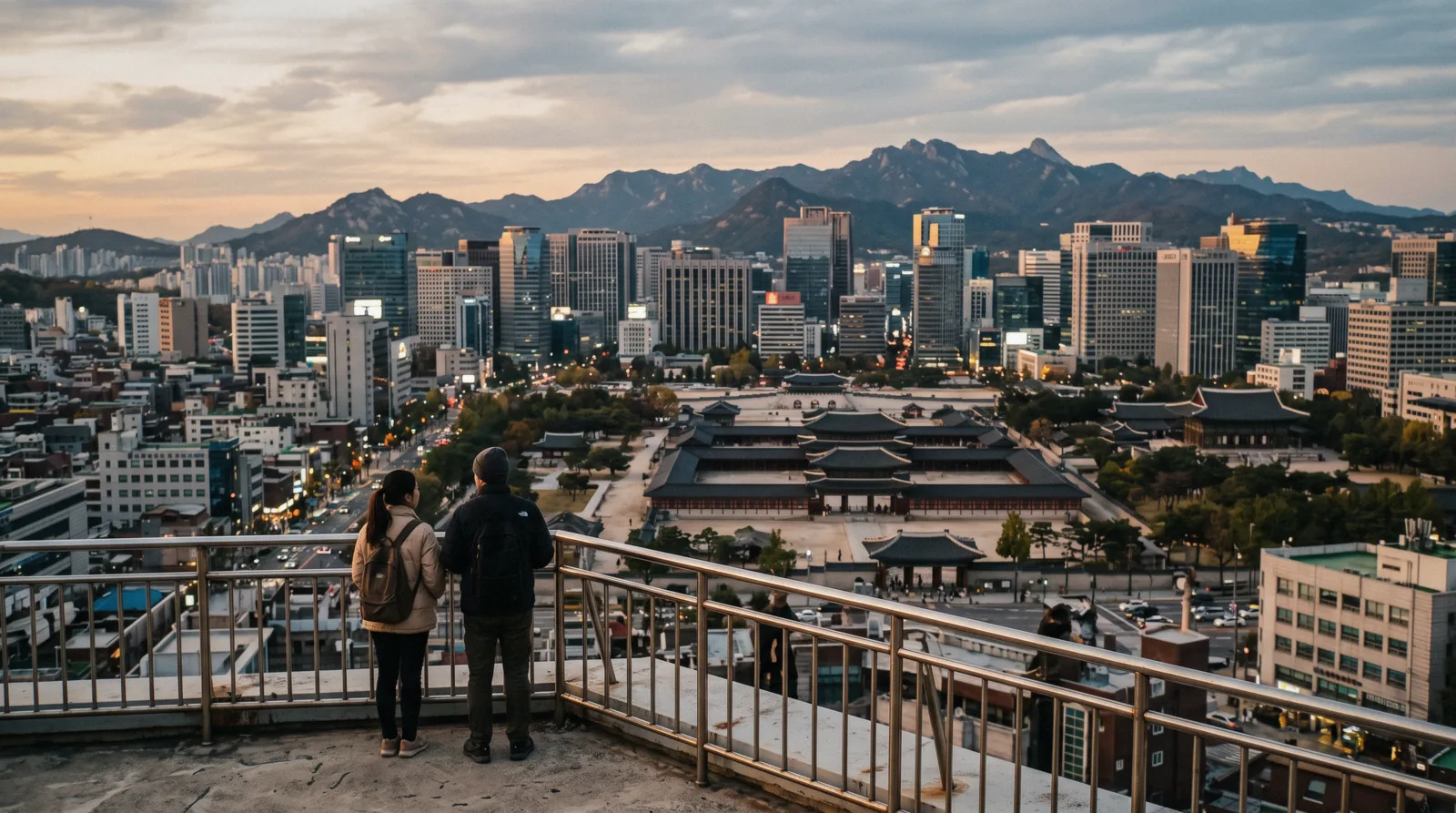
The Best Time to Visit Seoul, and the Trade Each Season Makes
The best time to visit Seoul is late September to early November, and the price of that answer is that everyone else knows it too. This page sets the weather against the crowds, the prices and the closures — including the holidays that shut the museums — checked in Q3 2026. The rest of the trip is on the Seoul city guide homepage.
Quick answer Autumn is right; November is the version without the crowd
Late September to early November is Seoul at its best: mean daily highs from 26 °C down to 12 °C, low rainfall, clear air and the autumn colour. It is also Korea's own travel peak, so the Huwon garden, the hotels and the mountain trails all fill. May is the spring equivalent. If you want the good weather without the crowd, the answer is November.
Key takeaways
- Book the Huwon garden slot the moment it opens if you are here in April, May, October or November.
- Chuseok, 24–27 September 2026, closes the national museums for the day and pauses palace programmes for the block.
- August is the cheapest and hardest month; February is the cheapest and clearest. The monthly numbers are here.
What Each Season Trades
The four seasons against the three things that matter — weather, crowds and price — using the 1991–2020 climate normals and the palace and museum calendars, checked in Q3 2026.
| Season | Weather | Crowds | What it costs you |
|---|---|---|---|
| Spring, March–May | 6 °C to 18 °C mean, dry until May | High from April | Fine dust days in March and April |
| Summer, June–August | 23 °C to 26 °C mean, 414 mm in July | Lowest of the year | Heat advisories, monsoon, typhoons |
| Autumn, September–November | 22 °C down to 7 °C, dry and clear | Highest of the year | Everything books out; prices peak |
| Winter, December–February | −2 °C to 0.7 °C, very dry | Low except at New Year | Cold; iced trails need crampons |
The clean way to read this: autumn and spring buy weather with crowds; summer and winter buy space with discomfort. Nothing in Seoul closes for a season, so the choice is comfort rather than access.
Autumn, and Why Everyone Says So
From mid-September the humidity breaks, and for about eight weeks Seoul has the weather it is famous for: dry, bright, cool mornings and mean highs sliding from 26 °C in September to 12 °C by mid-November.
The foliage runs late October into early November in the city and slightly earlier on Bukhansan. The palace gardens, the city wall ridges and Seoul Forest are the obvious places, and the Huwon garden at Changdeokgung is the one that requires planning.
The cost is company. This is Korea's own travel season, and Chuseok in late September sends the whole country moving. Hotel rates rise, the Huwon online allocation goes within minutes, and the mountain trails queue at the summit ropes on Saturdays.
The fix is the calendar rather than the season: mid-week, and the first half of November rather than the last week of October. Same weather, a third of the people.
The Holidays That Close Things
Two family holidays reshape the year, and both are set by the lunar calendar so their dates move.
Chuseok, the autumn harvest holiday, falls on 24 to 27 September in 2026. The national museums close on the day itself, the palaces run reduced programmes, and Gyeongbokgung's special viewings of Gyeonghoeru and Hyangwonjeong stop for the whole block. Half of Seoul travels to family homes, which empties the city and fills every train out of it.
Seollal, the lunar new year, does the same in late winter.
For a visitor the effect is contradictory: the city is quieter than usual, some things are shut, and intercity transport is impossible to book. If your dates overlap, plan around the closures using the closed-day page, and do not plan a Busan trip for those days.
The smaller dates worth knowing: Korea's Culture Day on the last Wednesday of each month, when museums extend hours; and Buddha's birthday in May, when Jogyesa is hung with lanterns for weeks beforehand.
The Two Underrated Months
November. The first half in particular. The foliage is still going, the air is dry and clear, the crowds have dropped off after the October peak, and the palaces are pleasant at ten in the morning. Mean daily highs around 12 °C mean a coat rather than a parka.
February. Cold — a mean of 0.7 °C — but very dry, very clear, and empty. This is when the observatories earn their money: winter air in Seoul regularly gives the view all the way to the mountains, which April rarely does. Hotel rates are at their lowest, the palaces have no queues, and the markets are at their best when it is cold.
The months to think twice about are July, for the rain, and August, for the heat and the suspended outdoor programmes. If those are your dates, plan an indoor spine — the free national museums, Lotte World, a jjimjilbang — and use the evenings, when the city is at its most comfortable.
What to Read Next
Three pages that turn a season into a plan.
Weather by month
The numbers behind all of this: Seoul weather by month.
- KMA 1991–2020 normals
- July 414 mm
- January 16.8 mm
Cherry blossom
When the blossom arrives and where to stand: Seoul cherry blossom.
- Dates move each year
- About a week
- Yeouido is the crowd
Seoul in winter
The clear, cheap, empty version: Seoul in winter.
- Best air of the year
- Lowest rates
- Crampons for the trails
When to Visit Questions
What is the best month to visit Seoul?
October for the weather and the foliage, or May for spring. Both are peak season. November's first half gives you nearly the same weather with a fraction of the crowd.
What is the cheapest time to visit Seoul?
February and August. February is cold, dry and clear; August is hot, wet and the hardest month to sightsee in. Rates are lowest in both.
When is the autumn foliage in Seoul?
Late October into early November in the city, a little earlier on Bukhansan. It coincides with Korea's own travel peak.
Should I avoid Chuseok and Seollal?
Not necessarily — the city empties and is pleasant. But national museums close on the day, palace special programmes pause, and intercity trains and buses are effectively impossible to book. Chuseok is 24–27 September in 2026.
Is Seoul worth visiting in summer?
It is the cheapest and least crowded season, and it rains 414 mm in July alone. Build the trip around indoor anchors and use the evenings; the palaces at 19:00 in July are pleasant.
When do I need to book things in advance?
April, May, October and November — those are the months the Korea Heritage Service itself flags as selling out fastest for the Huwon garden, and when hotels and DMZ tours fill.
How many days in Seoul is enough?
Three full days is the honest minimum for a first visit and four lets you add a day trip. The three-day plan routes it hour by hour.
Reviewed Q3 2026 (July–September 2026); next review Q4 2026. Prices, hours and terms are set by the venue or operator and confirmed at checkout.
We may earn a commission if you book through one of our links, at no extra cost to you. Full affiliate disclosure