 Seoul City Guide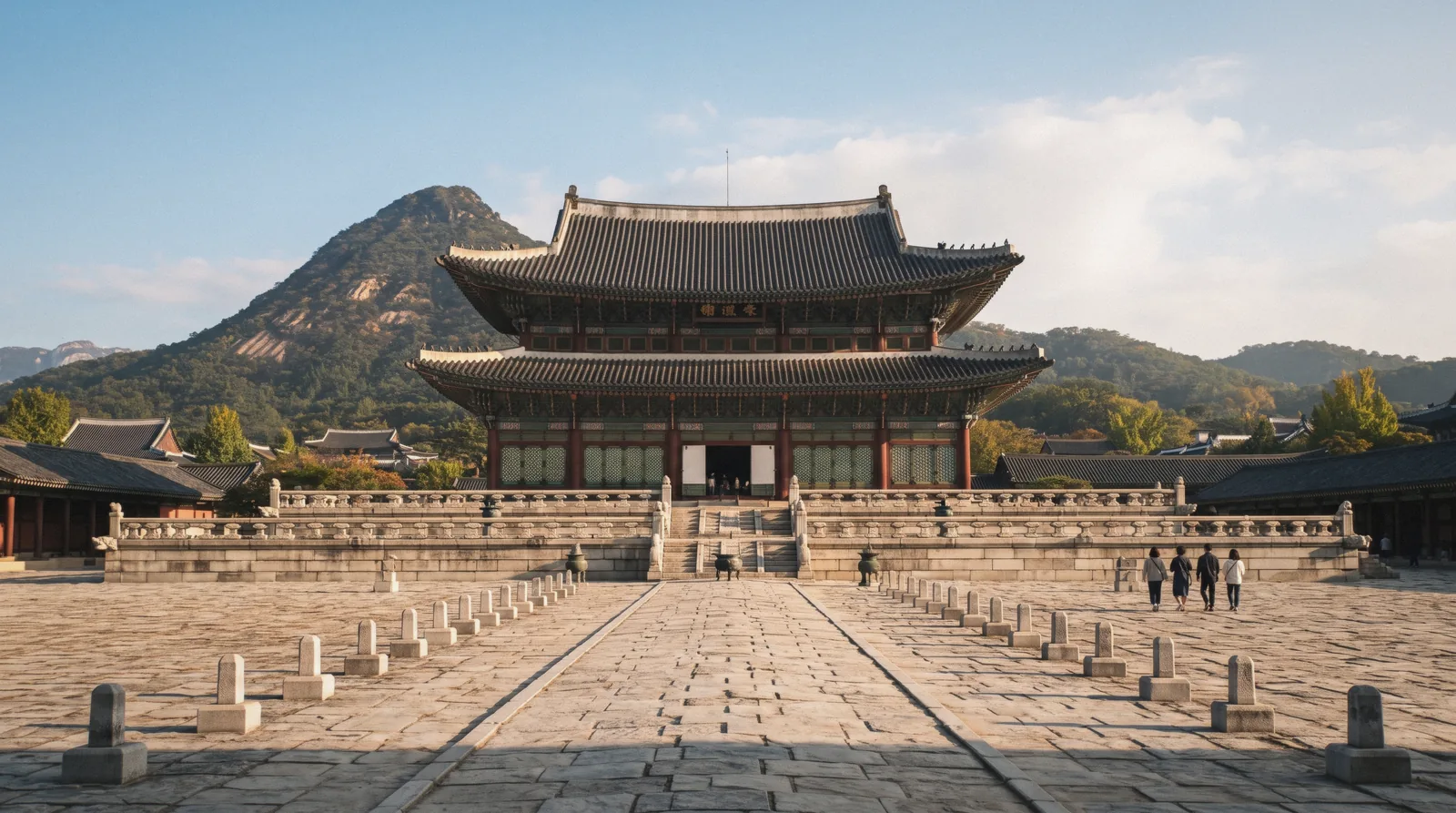
Gyeongbokgung Palace
Gyeongbokgung Palace is the largest of Seoul's five royal palaces and the one nearly every first visit starts with. This page carries its ticket price, seasonal hours, the Tuesday closure, the four daily ceremonies and the autumn 2026 night programmes, each read off the official pages in Q3 2026. Internal routes: the Seoul city guide homepage and the palace ticket maths.
Quick answer Tuesday closed, ₩3,000, and the ceremony you should time your arrival around
Gyeongbokgung Palace is the largest of Seoul's five royal palaces and the one every first visit starts with. Entry is ₩3,000 (about $2.20), it closes on Tuesdays rather than Mondays, and the changing of the royal guard runs at 10:00 and 14:00 in front of Gwanghwamun. Allow ninety minutes for the palace itself, or three hours if you also walk into the two national museums that sit on the same grounds and cost nothing.
Key takeaways
- If you are seeing more than one palace, the ₩6,000 integrated ticket pays for itself on the second visit and stays valid for six months.
- Turn up in hanbok and you walk in free — but the rental rules are stricter than the shops admit, and a rented outfit starts around $7 on a same-day rental with palace entry.
- Come on a Tuesday and you will find the gates shut. Deoksugung and Changgyeonggung close on Mondays instead, which is how you rescue a day.
Key facts
Opening hours
| March to May, September, October | 09:00–18:00 |
|---|---|
| June to August | 09:00–18:30 |
| November to February | 09:00–17:00 |
| Night viewing, 2 September – 2 October 2026 | 19:00–21:30 |
Closed Every Tuesday. If a Tuesday falls on a public holiday the palace opens and the closure moves to the next non-holiday day.
Admission
- Adult
- ₩3,000 (about $2.20); groups of 10 or more ₩2,400
- Reduced
- Free in hanbok, free under 7 and 65 and over
- Free
- Integrated ticket ₩6,000 covers five sites
Planning it
- Time needed
- About 90 minutes for the palace itself; 3 hours if you add the two free museums on the grounds
- Address
- 161 Sajik-ro, Jongno-gu, Seoul — Gyeongbokgung (Line 3), Exit 5 — the exit surfaces inside the palace forecourt; Gwanghwamun (Line 5), Exit 2 for the main gate
What You Are Actually Looking At
Gyeongbokgung was founded in 1395, three years after the Joseon dynasty moved its capital to Seoul, and it served as the main palace — the beopgung, the one where the king formally ruled. Japanese forces burned it in 1592 during the Imjin War and it then sat as a ruined field for more than two and a half centuries, which is longer than it has ever stood complete. The buildings you walk between were raised in the 1860s under Heungseon Daewongun, regent for the boy king Gojong.
That second palace did not last either. Under Japanese colonial rule most of its halls were dismantled and sold, and a Government-General building was planted directly in front of the throne hall, blocking the axis from the mountain to the gate. It stood until 1995. What is going on now — and what you will see fenced off on any visit — is a long restoration that has been running since 1990 and is still not finished. Gwanghwamun's stone woldae approach came back in October 2023; other courtyards are still hoardings and cranes.
The reason it matters for your visit is simple: this is not a preserved palace, it is a rebuilt one, and the pleasure is in the siting rather than the age. Geunjeongjeon sits on its terrace with Bugaksan rising directly behind it, and the sightline from the gate through three courtyards to the mountain is the thing Joseon planners were actually designing.
The Ninety-Minute Route Through the Palace
Walk in through Gwanghwamun, cross the forecourt and pass Heungnyemun into the main courtyard. Geunjeongjeon, the throne hall, stands on a double stone terrace lined with rank stones that told officials where to stand. Note that the terrace itself — the woldae — is closed to visitors from 2 September to 31 October 2026 while conservators work on it, so this autumn you look rather than climb.
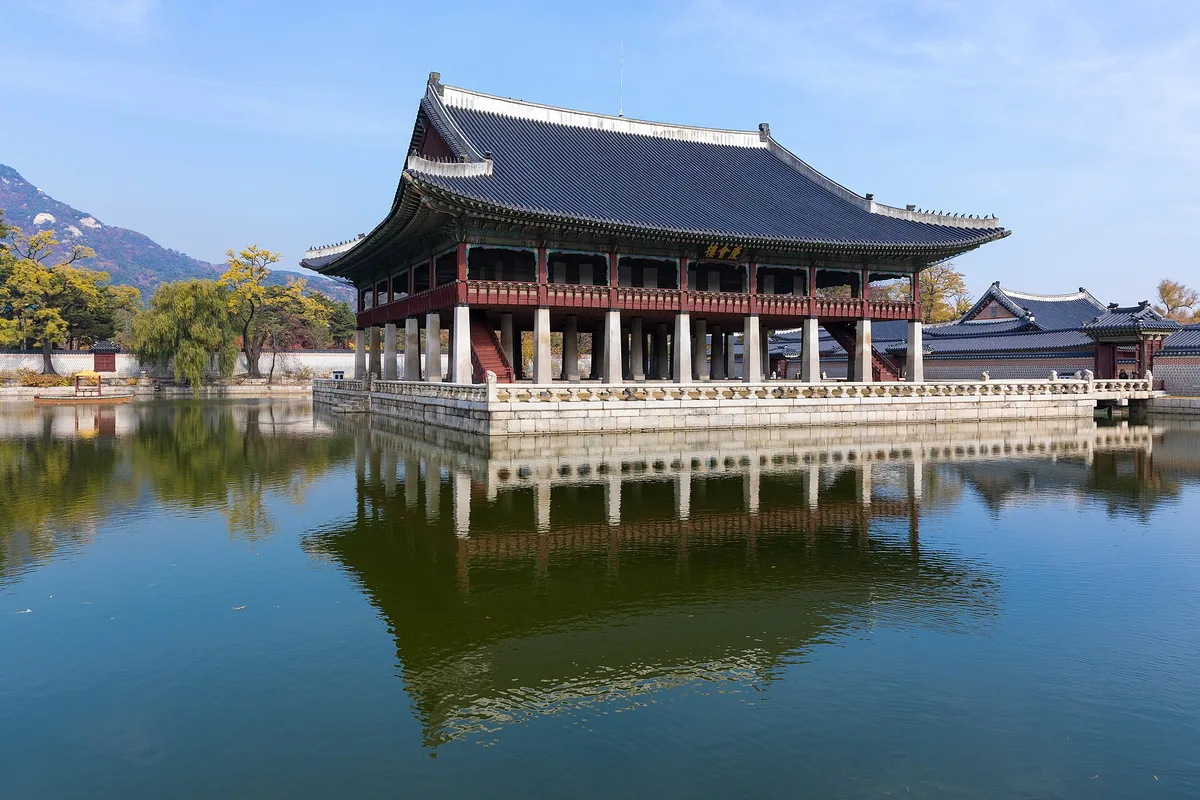
Behind the throne hall the palace turns domestic. Sajeongjeon was the working office, Gangnyeongjeon the king's quarters, Gyotaejeon the queen's, and behind Gyotaejeon is the small terraced garden of Amisan, where four brick chimneys are decorated well beyond anything a chimney needs. Keep going north and the ground opens onto Gyeonghoeru, the banquet pavilion standing on forty-eight stone pillars in its own pond — the single best photograph on the grounds, taken from the south-west corner in the late afternoon.
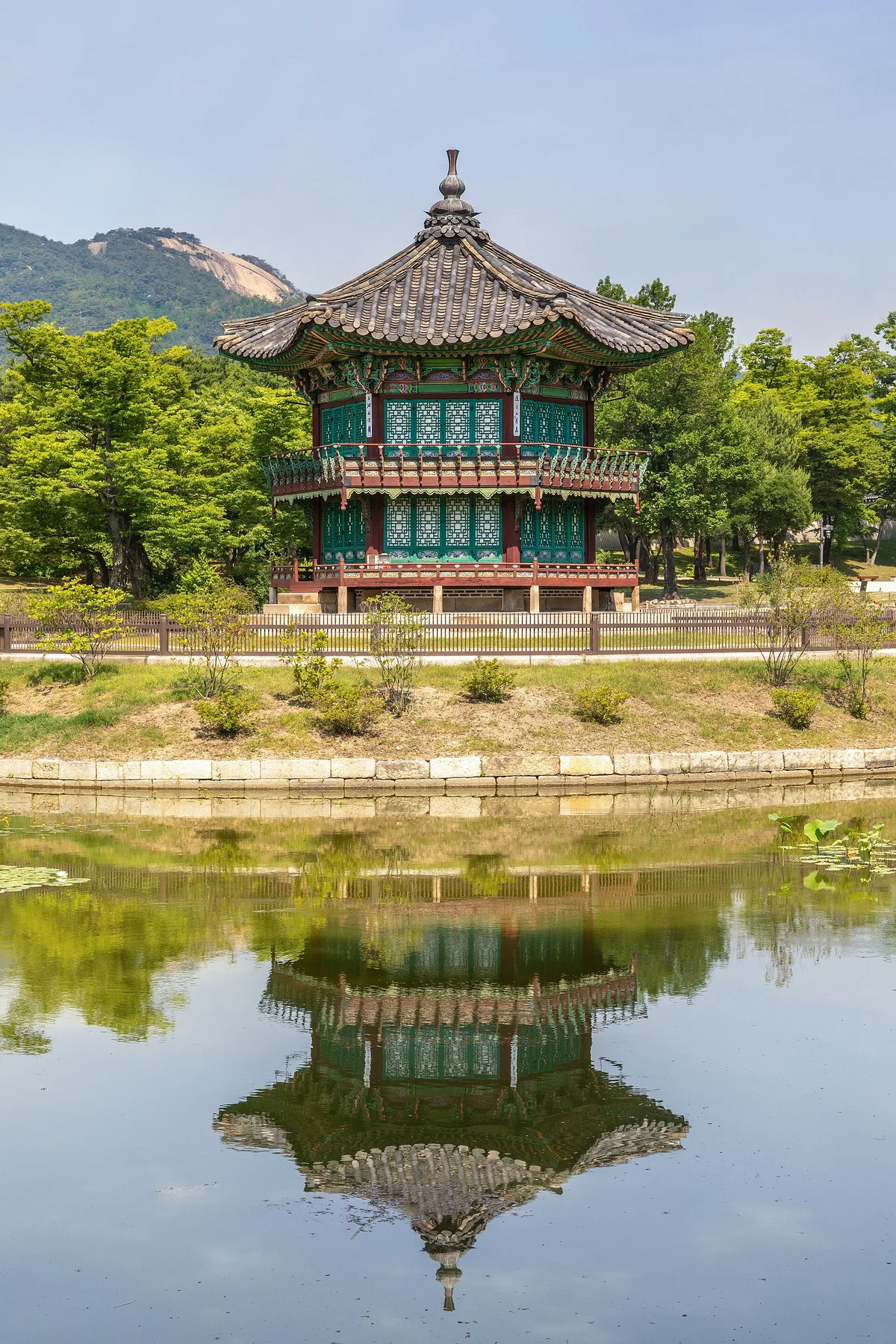
Further north again, past Hyangwonjeong's hexagonal pavilion on its island, is Geoncheonggung, the private residence Gojong built for himself. Empress Myeongseong was killed here by Japanese agents in 1895, and the site is marked quietly. Most visitors turn back before this point, which is exactly why it is worth the extra ten minutes.
Ceremonies and What Time to Stand Where
Four separate ceremonies run at Gwanghwamun and inside the gate every open day, and they are not the same event repeated. Times are the Korea Heritage Service Foundation's own schedule, checked in Q3 2026; all of them stop on Tuesdays and in heat or storm warnings.
| Ceremony | Time | Runs for | Where to stand |
|---|---|---|---|
| Public training of the gate guards | 09:35 and 13:35 | 15 minutes | Heungnyemun courtyard, inside the first gate |
| Changing of the royal guard | 10:00 and 14:00 | 20 minutes | Gwanghwamun plaza, the main event |
| Gwanghwamun sentry ceremony | 11:00 and 13:00 | 10 minutes | At the gate itself; small, and almost nobody watches |
| Sullae guard procession | 15:00–16:00, weekends and holidays in March–May and September–November | 1 hour | Saturdays inside the palace; Sundays from Gwanghwamun to Insadong |
The guard ceremonies are cancelled outright in extreme-heat advisories — they were suspended for stretches of August 2026 — so in a hot spell check the palace notice board before planning your morning around them.
What It Costs and What Is Free
Adult admission is ₩3,000, about $2.20, paid at the ticket window beside Gwanghwamun; a group of ten or more pays ₩2,400 each. Children under seven and visitors aged sixty-five and over go free. There is no timed slot and no need to book: you buy at the gate and walk in.
Two things change that arithmetic. If your trip includes more than one palace, the integrated ticket at ₩6,000 covers Gyeongbokgung, Changdeokgung, Changgyeonggung, Deoksugung and Jongmyo, one visit each, for six months from purchase — it pays for itself the moment you use it twice. And if you are wearing hanbok, entry is free, which is why the streets around the palace are lined with rental shops.
The grounds also hold two national museums that charge nothing: the National Palace Museum of Korea near Exit 5 of the metro, and the National Folk Museum of Korea on the eastern side. Neither is included in anything because neither costs anything, and together they add an hour or two to the visit.
Hanbok Gets You In Free — and What Does Not Count
The free-entry rule is written down, and it is stricter than the rental shops let on. Both traditional and modern saenghwal hanbok qualify, but the outfit has to be a top and a bottom worn together. A durumagi overcoat thrown over ordinary clothes does not count. Jeans with a jeogori does not count. Hanbok trousers with a T-shirt does not count. The Korea Heritage Service publishes a question-and-answer sheet on exactly these edge cases because staff at the gate turn people away over them.
Rentals cluster on the streets between the palace and Bukchon and start at a few hours; the cheapest listings we track bundle the outfit with palace entry from about $7. The practical note is one of timing rather than price: a rental collected at 09:00 gives you the ceremony at 10:00 and the palace before the light gets flat, and the shops get slower as the morning goes on.
Ways In, Official Window First
The palace sells its own ticket at the gate and there is no queue-skipping product to buy; what the partners sell is a guide, a hanbok, or a route that strings several sites together. Gate price read off royal.khs.go.kr and partner prices off GetYourGuide in Q3 2026.
| Option | Price | What it gets you | Cancel | Book |
|---|---|---|---|---|
| Ticket window, Gwanghwamun | ₩3,000 (about $2.20) | Palace grounds, plus the two free museums | Not applicable — buy on the day | Official site |
| Integrated palace ticket | ₩6,000 (about $4.30) | This palace plus Changdeokgung, Changgyeonggung, Deoksugung and Jongmyo, six months | No refund once any coupon is torn | Official site |
| Hanbok rental with palace entry | from $7 | Outfit for the day; entry is then free | Free, 24 h before | Check Availability |
| Guided palace history walk | from $32 | 2.5 hours, a guide, optional hanbok | Free, 24 h before | Check Availability |
Official ticket-office links are not affiliate links.
Autumn 2026: The Evening Programmes
Gyeongbokgung runs a second life after dark, and the autumn 2026 dates are published. General night viewing runs from 2 September to 2 October 2026, 19:00 to 21:30 with last entry at 20:30, closed Mondays and Tuesdays, covering Gwanghwamun, Heungnyemun, Geunjeongjeon, Gyeonghoeru, Sajeongjeon, Gangnyeongjeon, Gyotaejeon and Amisan.
Two smaller programmes need booking. Byeolbit Yahaeng, the star-light night tour of the kitchens, Jibokjae and Hyangwonjeong, runs 2 September to 24 October at 18:30 and 19:40, Wednesday to Sunday, with no sessions from 30 September to 4 October and foreigner-only sessions from 21 to 24 October. Saenggwabang, the royal tea and confectionery sitting, runs 2 September to 26 October at 10:00, 11:40, 14:00 and 15:40 on open days.
The special viewing of Gyeonghoeru and Hyangwonjeong — the only way inside the banquet pavilion — runs from April to 30 October on Wednesdays and Fridays only, and is suspended through the June-to-August heat and over the Chuseok holiday of 24 to 27 September 2026 and Hangeul Day on 9 October.
The published autumn 2026 evening programmes at Gyeongbokgung, from the palace's own events calendar. Two of the four need a reservation through the palace system; the other two are covered by an ordinary ticket.
| Programme | Dates | Times | Booking |
|---|---|---|---|
| Night viewing | 2 September – 2 October | 19:00–21:30, last entry 20:30 | Ordinary ticket, no Monday or Tuesday |
| Byeolbit Yahaeng night tour | 2 September – 24 October | 18:30 and 19:40, Wednesday to Sunday | Reservation; none 30 September – 4 October; foreigner-only 21–24 October |
| Saenggwabang royal tea | 2 September – 26 October | 10:00, 11:40, 14:00, 15:40 | Reservation, open days only |
| Gyeonghoeru and Hyangwonjeong special viewing | To 30 October | Wednesdays and Fridays | Reservation; suspended over Chuseok, 24–27 September, and on 9 October |
How to Get There
Gyeongbokgung station on Line 3 is the useful one: Exit 5 comes up inside the palace forecourt beside the National Palace Museum, so you arrive without crossing a road. Gwanghwamun station on Line 5, Exit 2, puts you at the far end of the plaza with the full approach to the gate in front of you, which is the better arrival if you are coming for the 10:00 ceremony.
A single metro ride costs ₩1,550 on a transport card, and the transfer window and card rules matter more than the fare. From Insadong it is a fifteen-minute walk; from Bukchon Hanok Village it is about ten minutes downhill, which is the direction to walk it.
The Two Free Museums on the Grounds
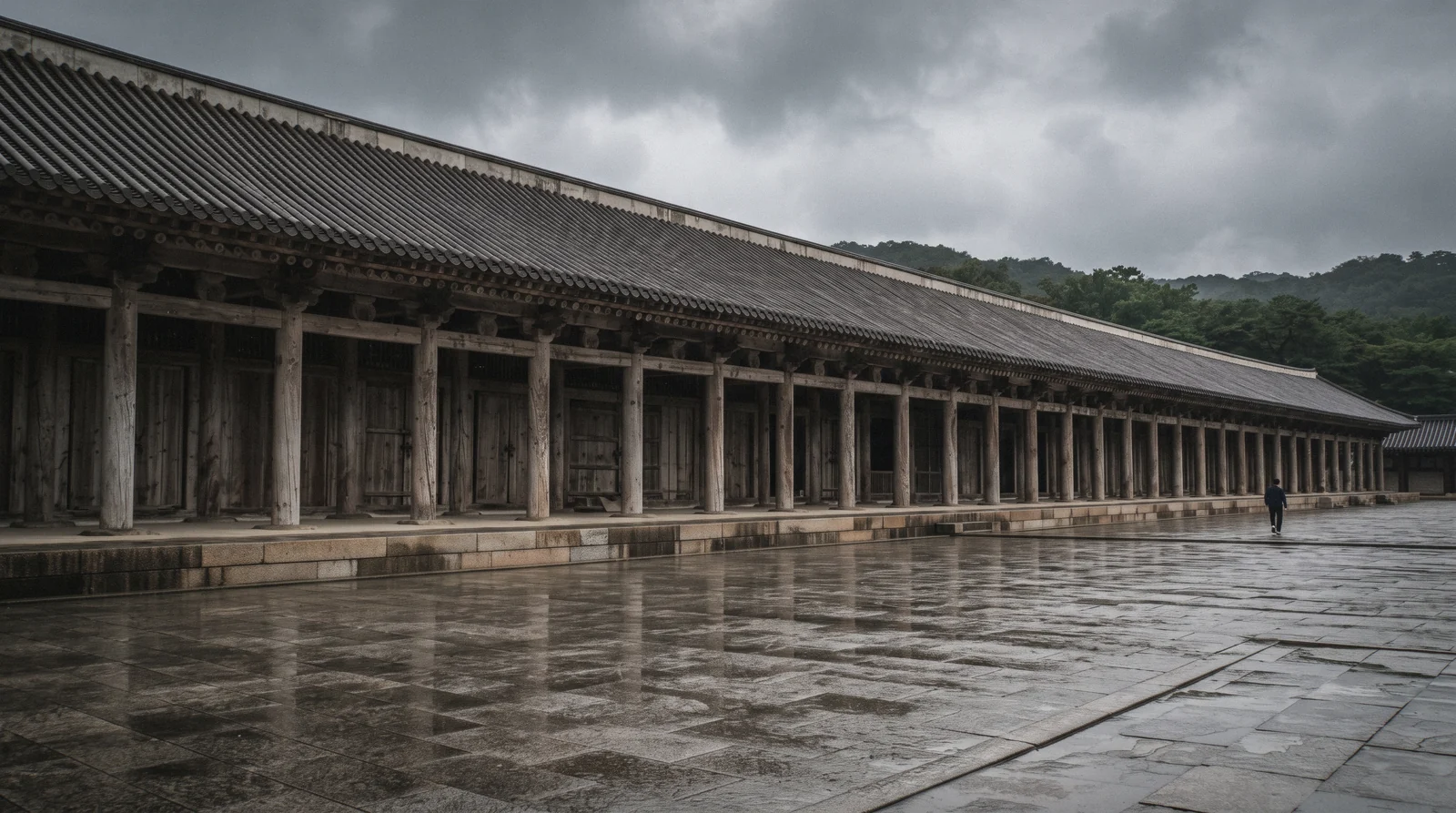
Two national museums stand inside the palace walls and neither charges admission, which makes them the best wet-weather insurance in this part of Seoul.
The National Palace Museum of Korea sits beside Exit 5 of Gyeongbokgung station, at the south-western corner, and holds what survived of the court itself: royal seals, the irwolobongdo screen that stood behind the throne, astronomical instruments, and the palanquins and robes that put the empty halls outside into some kind of context. An hour is enough and it is the museum to do first, before you walk the palace, not after.
The National Folk Museum of Korea is on the eastern side and covers ordinary life rather than the court — farming years, weddings, funerals, a reconstructed street of mid-century shopfronts that Korean visitors treat as a nostalgia set. It also has the best children's museum in central Seoul. Both are covered in the wider Seoul museums guide, and neither of them keeps the palace's Tuesday closure, so they can rescue the day you turn up on the wrong one.
When to Come, and What the Light Does
Opening is at 09:00 all year and the first hour is the quiet one. Tour groups build towards the 10:00 guard change and the courtyards stay busy until early afternoon; by 16:00 in the shoulder seasons the crowd thins out and the low sun comes down the axis from the gate, which is when Geunjeongjeon photographs best.
Seasonally, the palace is at its best in the second half of October, when the ginkgos along the eastern wall turn and the air is dry — this is also when the autumn crowd peaks. April brings blossom and the spring palace festival. Midsummer is the season to avoid if you can: Seoul sits under humid heat from late June, the courtyards are unshaded granite, and the guard ceremonies themselves are called off during heat advisories. Winter is cold and clear, the palace shuts at 17:00, and you will have Gyeonghoeru's frozen pond almost to yourself.
The one date to plan around is Chuseok, from 24 to 27 September 2026, when the special viewings stop and the city empties in one direction and fills in another.
What First-Timers Get Wrong Here
Four errors account for most of the wasted mornings at this gate.
The first is the closed day. Seoul's palaces do not share one; Gyeongbokgung and Jongmyo take Tuesday, everything else takes Monday, and a Tuesday itinerary built around this palace collapses.
The second is treating hanbok as a costume rather than a rule. Staff check that the outfit is a complete top and bottom, and the shops nearest the gate will happily rent you a combination that does not qualify.
The third is assuming the night viewing is the same thing as the evening tours. General night viewing is a plain ticket for a published season; Byeolbit Yahaeng is a small guided programme with its own reservation, its own price and sessions that sell out within minutes of opening.
The fourth is arriving at 13:50 for the 14:00 ceremony and finding the plaza three deep. Fifteen minutes early puts you at the rope on the western side, where the procession enters.
Practicalities: Bags, Water, Wheels
The palace is flat gravel and stone with a handful of stepped thresholds, and wheelchairs and strollers get around most of it; the raised terraces of the throne hall and the pavilions are the exceptions. Free wheelchair and stroller loans are handled at the information desk inside Heungnyemun.
There is no cloakroom for large luggage, so leave suitcases in a metro station locker before you come. Water fountains are scarce and shade is scarcer; in July and August carry a bottle and plan the visit around the two museums' air conditioning. Audio guides in English, Japanese and Chinese are rented near the main gate, and the palace runs free English-language guided walks at set times daily, listed at the ticket window on the day.
Toilets sit at the entrance, beside Gyeonghoeru and near the Folk Museum. Photography is allowed everywhere outdoors, but the palace's own visitor rules treat tripods, commercial shoots and drones as filming that needs written permission in advance.
Gyeongbokgung on the Map
Pinned at the entrance, with the pages for what is nearby.
Next Stop from the Palace
Three places within a fifteen-minute walk, in the order that works after a morning at the palace.
Bukchon Hanok Village
About 10 minutes east and uphill to Bukchon Hanok Village, best before 11:00 while the lanes are still quiet.
10 min walkChangdeokgung
About 15 minutes to Changdeokgung and its Huwon garden — but the garden runs on timed entry, so it needs booking before you set out.
15 min walkGuided Visits and Hanbok Bookings
Four listings that start at this palace: a hanbok with entry, a history walk, and two half-day routes that add Bukchon and the markets. Ratings and prices are the operators' own figures, checked in Q3 2026.
 from $7.31
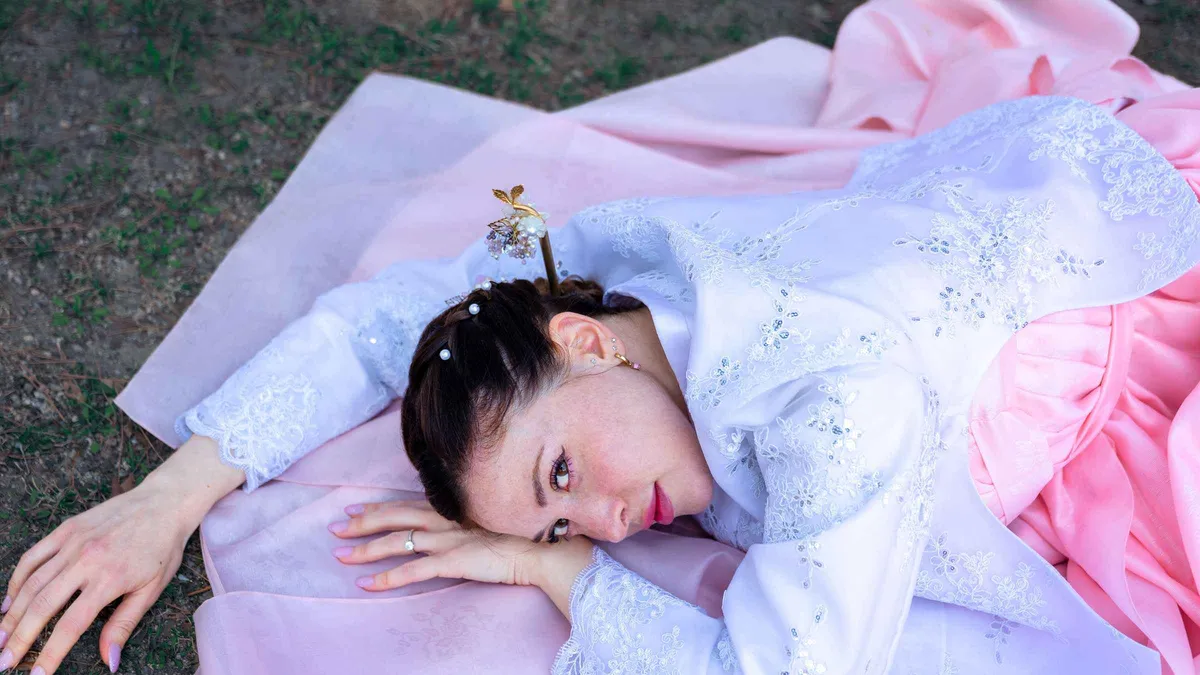
Seoul: Hanbok Rental with Gyeongbokgung Palace Entry
Wear a Korean Hanbok and explore Gyeongbokgung Palace with this experience. Choose your preferred Hanbok, match your hairstyle to the Hanbok, and discover the nearby.
Check Availability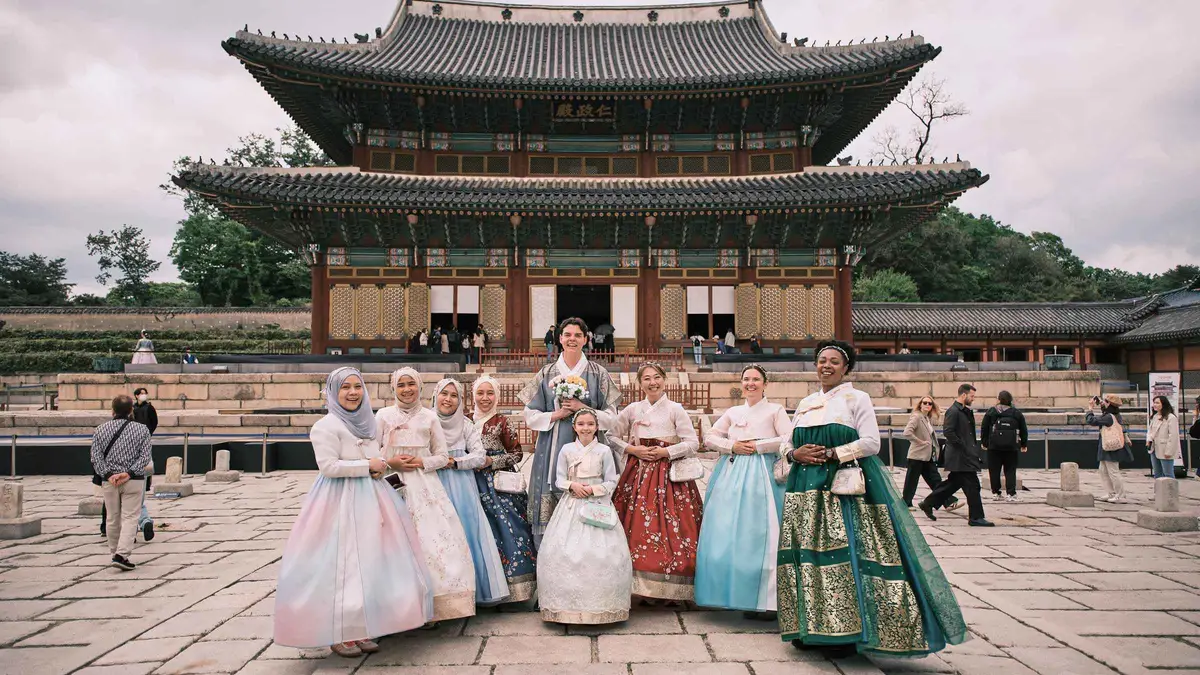 from $32
Seoul: UNESCO Palace History Tour, Photos & Optional Hanbok
Explore UNESCO-listed Changdeokgung with an English-speaking history guide. Discover royal stories, enjoy casual travel photos, and choose to enhance your experience with optional.
Check Availability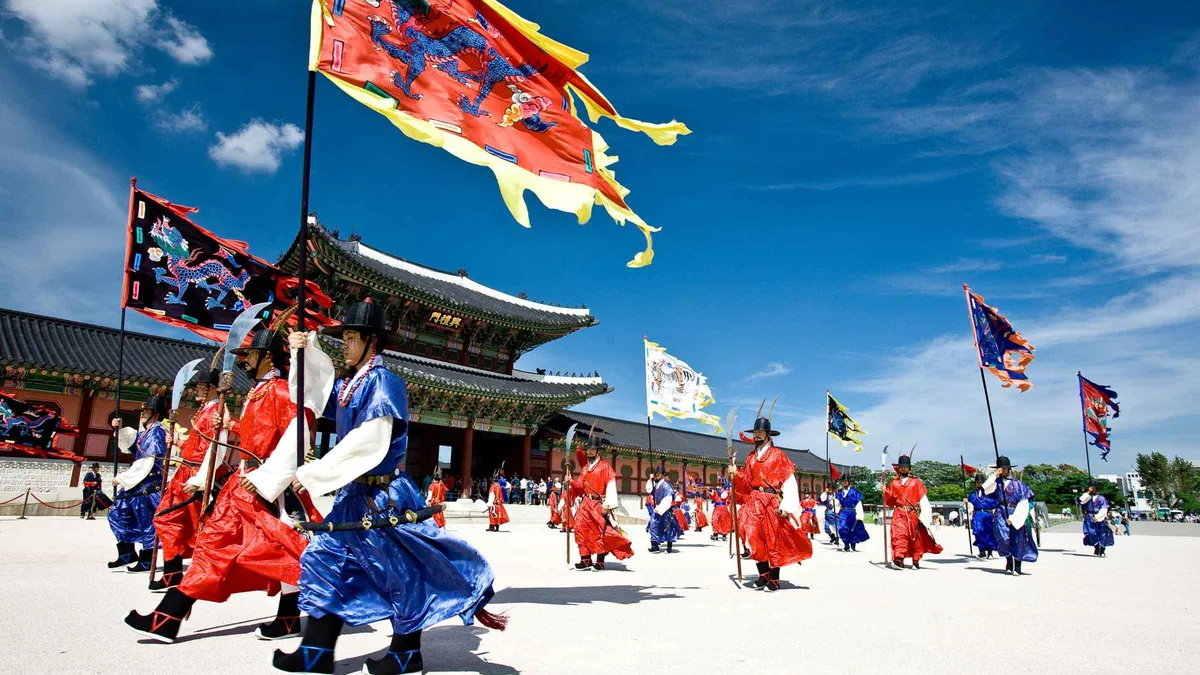 from $33
Seoul: Gyeongbok Palace, Hanok Village, and Gwangjang Tour
See the beautiful northern sides of Seoul as you visit Gyeongbokgung Palace and Hanok village. Later, enjoy a panorama view at Bugak Palgakjeong and try delicious snacks at Gwangjang.
Check Availability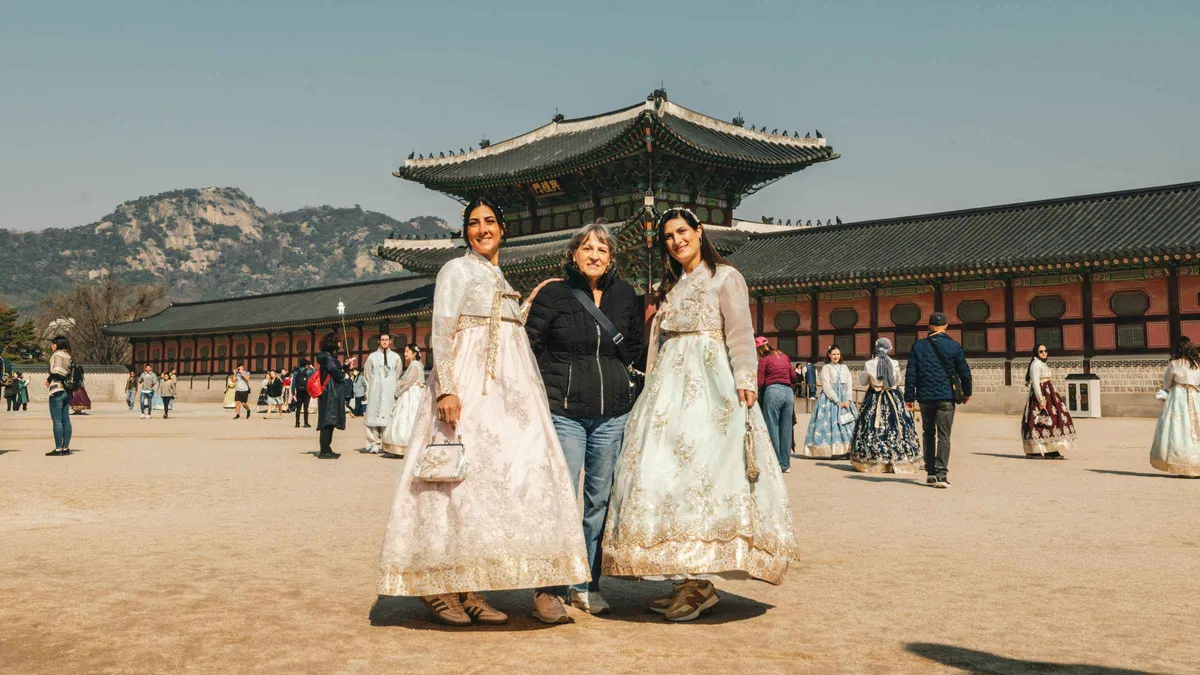 from $57
Seoul: Half-Day City Highlights & Palace Tour with Hanbok
Step back in time at Gyeongbokgung Palace and Bukchon Hanok Village on this small-group walking tour (max 15) in Seoul. Choose a tour with or without a Hanbok and enjoy tasty snacks along the.
Check AvailabilityPrices, ratings and details are the platform's own, checked in Q3 2026; dollar figures are the listed prices — the platform bills in your account's currency.
Gyeongbokgung Palace Questions
Is Gyeongbokgung Palace free entry?
No — adults pay ₩3,000, about $2.20. It is free if you are wearing full hanbok, under seven, or sixty-five and over. The two museums on the grounds are free to everyone. If you plan to see other palaces, the ₩6,000 integrated ticket is the cheaper route.
What day is Gyeongbokgung Palace closed?
Tuesdays. This catches people out because Changdeokgung, Deoksugung and Changgyeonggung close on Mondays instead — the full closed-day map is here. When a Tuesday is a public holiday the palace opens and closes the next non-holiday day instead.
What time is the changing of the guard at Gyeongbokgung?
10:00 and 14:00, for about twenty minutes, on the plaza in front of Gwanghwamun. There is also a shorter sentry ceremony at 11:00 and 13:00 and a public guard training at 09:35 and 13:35. All of it stops on Tuesdays and during extreme-heat advisories.
Is there a dress code for Gyeongbokgung Palace?
There is no dress code for entry. There is a dress rule for the free-entry concession: hanbok must be a matching top and bottom, so a durumagi coat alone or jeans with a jeogori will be refused at the window. The hanbok rental page sets out what the shops actually hand you.
How long do you need at Gyeongbokgung Palace?
Ninety minutes covers the throne hall, the residential courtyards and Gyeonghoeru at a walking pace. Add the National Palace Museum and the National Folk Museum and you are at three hours. Timing your entry for 09:30 gives you the palace before the 10:00 ceremony crowd arrives.
Which king lived in Gyeongbokgung Palace?
It was founded for King Taejo in 1395 and served Joseon kings until 1592. After the rebuild of the 1860s it was Gojong's palace, and his private residence at Geoncheonggung, at the north end of the grounds, is where Empress Myeongseong was killed in 1895.
Can you visit Gyeongbokgung at night?
During the published night-viewing seasons, yes. Autumn 2026 runs 2 September to 2 October, 19:00 to 21:30 with last entry at 20:30, closed Mondays and Tuesdays. The smaller Byeolbit Yahaeng tour and the Saenggwabang tea sitting need advance booking through the palace's own reservation system.
Is Gyeongbokgung or Changdeokgung better?
Gyeongbokgung is the grander set piece and the easier visit; Changdeokgung is the UNESCO-listed one, and its Huwon garden — a separate ₩5,000 on top of the palace ticket, on timed entry — is the more memorable hour. First visit: Gyeongbokgung in the morning for the ceremony. Second visit, or a quieter trip: Changdeokgung with a booked Huwon slot.
Reviewed Q3 2026 (July–September 2026); next review Q4 2026. Prices, hours and terms are set by the venue or operator and confirmed at checkout.
We may earn a commission if you book through one of our links, at no extra cost to you. Full affiliate disclosure